
I sometimes use affiliate links in content. This doesn’t cost you anything but I may make a commission payment from anything you buy through these links. As an Amazon Associate I earn from qualifying purchases. All opinions remain my own.
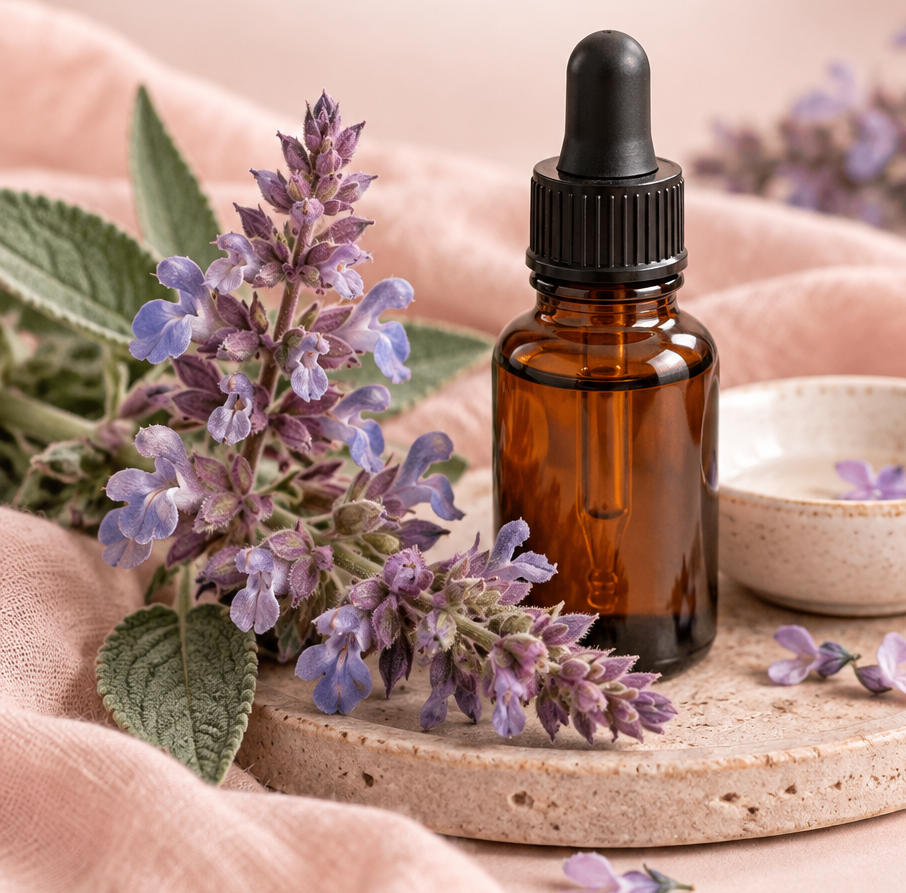
If you have ever opened a bottle of clary sage and expected the savoury, kitchen-cupboard smell of the sage in your stuffing, you are in for a surprise. Clary sage is herbaceous, softly floral and a little musky, with a warm, almost wine-like depth that sets it far apart from its culinary cousin.
It is also one of the most commonly muddled oils on the shelf. People mix it up with common sage, and they mix up true essential oil with infused oil. This guide clears up both, then walks you through the scent, the traditional uses, some simple blends and, importantly, the safety points to know before you bring a bottle home.
Table of Contents
🌿 What Is Clary Sage Essential Oil?
Clary sage is the common name for Salvia sclarea, a flowering herb native to the Mediterranean region and parts of Central Asia. It is now grown in many countries, including France, Bulgaria, Russia and the United States.
The essential oil is made by steam distillation, usually from the flowering tops and leaves. The result is a pale, clear to yellowish liquid with a sweet, herbaceous aroma.
The name “clary” is thought to come from the old word for “clear”, and the plant has a long history in European folk traditions. That history is part of why people still reach for it today.
🔎 Clary Sage vs Common Sage
Here is the mix-up that causes the most confusion. Clary sage (Salvia sclarea) and common sage (Salvia officinalis) belong to the same genus, but they are different plants with different aromas and different safety profiles.
- Clary sage: soft, floral, herbaceous and slightly musky. Often chosen for calming blends.
- Common sage: sharper, camphor-like and more medicinal. It needs more care, so please do not treat the two as interchangeable.
If a label only says “sage”, check the Latin name on the bottle. For a full look at the other plant, see my guide to sage essential oil.
🧪 Essential Oil vs Infused Oil
The second mix-up is between a true essential oil and an infused oil. They are not the same thing, and it matters when you are following a recipe.
An essential oil is a concentrated aromatic extract, usually made by distillation. It is very potent and always needs diluting before it touches your skin.
An infused oil is made by steeping dried herbs in a carrier oil, such as olive or sweet almond. It is much gentler, smells far fainter and contains no distilled essential oil at all.
If you are curious about the difference in practice, my post on how to make lavender essential oil at home explains why home infusions are not the same as the real thing.
👃 What Does Clary Sage Smell Like?
Most people describe the scent as herbaceous and floral, with a hint of musk and a rich, slightly wine-like sweetness. Some find it earthy, and others find it almost hay-like at first.
In perfumery terms it usually sits as a middle to base note. That means it appears after the bright top notes fade, and it lingers for a while, which makes it useful for rounding out a blend.
It pairs well with:
- Lavender, for a soft, familiar floral base
- Bergamot, for a lift of citrus brightness
- Geranium, for a rosy, green sweetness
- Frankincense, for a resinous, grounding depth
- Cedarwood, for a warm, woody finish
If you are new to blending, how to mix essential oils is a helpful place to start.
🕯️ Traditional and Aromatherapy Uses
Clary sage has a long history in folk traditions, and in modern aromatherapy it is generally chosen for its scent rather than for any promised result.
Many people use it to create a calm, quiet atmosphere in the evening. It is often added to a bedtime routine, a reading corner or a relaxing bath-time ritual. If that sounds appealing, you might also enjoy my list of the best essential oils for sleep.
Here are some of the ways people commonly use it:
- In a diffuser: a few drops in the evening to help create a soothing, settled space.
- In a room spray: blended with water and a suitable dispersant, then lightly misted around the room.
- In a diluted massage blend: mixed into a carrier oil for a relaxing hand or shoulder rub.
- In a bath ritual: blended into a carrier first so it doesn’t float on the surface.
It is worth being honest about the evidence. Most of what is written about clary sage rests on traditional use, small studies or early research. Some people find the scent relaxing, and that personal experience is valid, but it should not be read as a promise that it will do anything specific for you. The oil is for fragrance and atmosphere, not for treating or preventing any condition.
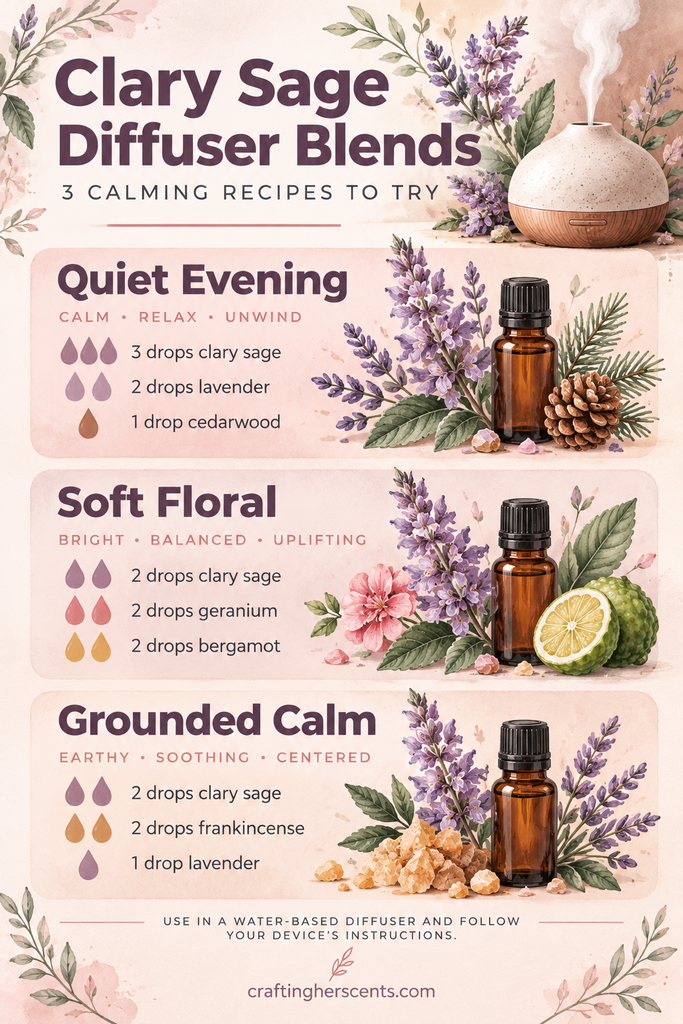
💨 Diffuser Blends to Try
These are simple starting points. Add the drops to a water-based ultrasonic diffuser and follow your device’s instructions.
Quiet Evening: 3 drops clary sage, 2 drops lavender, 1 drop cedarwood.
Soft Floral: 2 drops clary sage, 2 drops geranium, 2 drops bergamot.
Grounded Calm: 2 drops clary sage, 2 drops frankincense, 1 drop lavender.
For lavender, a good-quality lavender essential oil is the easiest to find and blends with almost anything. If you want to learn more about it first, read my lavender essential oil guide.
For the rosy blend, a bottle of geranium essential oil is lovely, and you can read more in my geranium essential oil profile.
If you need help choosing a device, how to choose the right diffuser for your space covers the basics.
🧴 A Simple Diluted Roller Blend
A roller bottle is a handy way to carry a gentle scent with you. This recipe uses a light dilution (about 0.5 to 1 per cent) and is for adults with no known sensitivities.
You will need:
- A 10 ml amber glass roller bottle
- A skin-safe carrier oil, such as jojoba or fractionated coconut oil
- Clary sage and lavender essential oils
Method:
- Add 1 drop of clary sage and 1 drop of lavender to the empty bottle.
- Fill the rest of the bottle with your carrier oil and fit the roller top.
- Gently roll the bottle between your palms to mix.
- Patch test first (see the safety section below) before using more widely.
Dark glass protects the oil from light, so a set of amber glass roller bottles is worth having. For more on carrier oils, see my guide to carrier oils.
🌙 Building It Into an Evening Routine
If you are not sure where clary sage fits in your day, the evening is the most natural place. Its soft, rounded scent suits quiet moments rather than busy ones.
Try diffusing it for a short session while you tidy up, read or wind down. Some people like to switch the diffuser on about half an hour before bed and turn it off before they settle. That keeps the scent gentle and stops the room from feeling heavy.
Pair it with other calming habits, such as dimming the lights and putting your phone away. The oil is a pleasant cue, and it is the routine around it that does most of the work.
⚠️ Safety First
Clary sage is a gentle-smelling oil, but it is still a concentrated plant extract, and a few precautions apply.
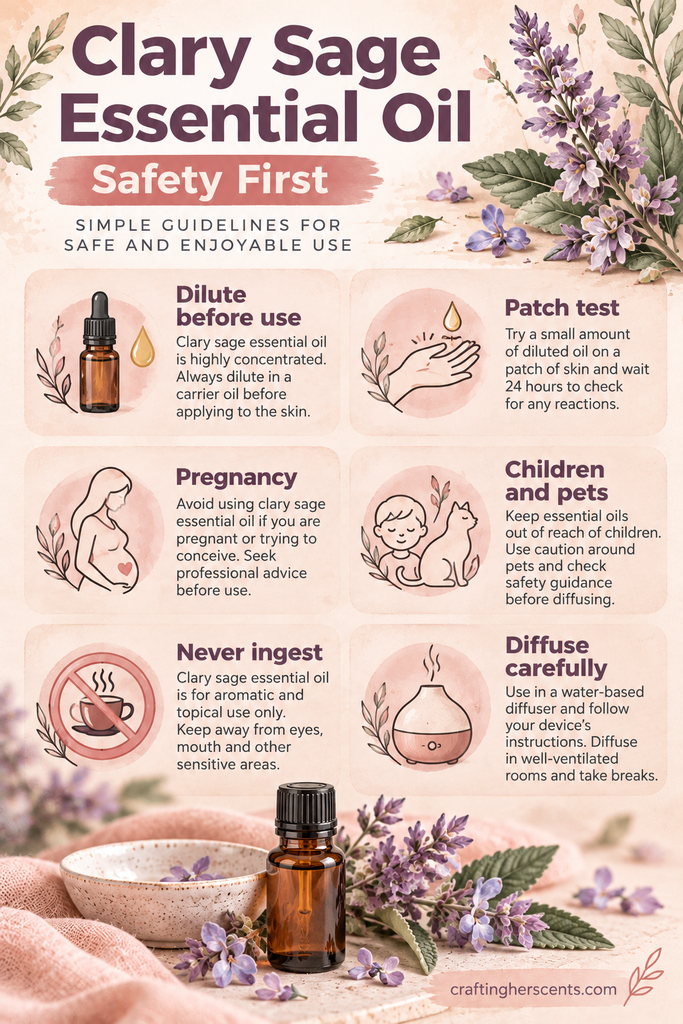
Pregnancy and breastfeeding. Clary sage is one of the oils many aromatherapy sources advise avoiding, or only using under professional guidance, during pregnancy. Please speak to your doctor, midwife or a qualified aromatherapist before using it, and do not use the recipes in this post if you are pregnant or trying to conceive without that advice. The same caution applies while breastfeeding.
Medical conditions and medication. If you have a medical condition, take regular medication, or have low blood pressure, talk to your doctor before using clary sage. Essential oils are not a substitute for medical care.
Alcohol and drowsiness. The scent can feel quite relaxing, and some people find it makes them sleepy. Many aromatherapy sources suggest avoiding alcohol alongside heavy use of the oil, and not driving or operating machinery if you feel drowsy after diffusing it.
Dilution and patch testing. Never apply clary sage undiluted. A common guideline for adults is a dilution of roughly 0.5 to 1 per cent, which works out at about 3 to 6 drops per ounce (30 ml) of carrier oil. Before first use, put a small amount of the diluted blend on your inner forearm and wait 24 hours to check for any reaction.
Eyes, mouth and ingestion. Keep the oil away from your eyes and the inside of your nose, and do not take it by mouth.
Children and pets. Keep all essential oils out of reach of children, and speak to a professional before using them around babies or young children. Many essential oils can be harmful to cats and dogs, so read my essential oils for pets guide before you diffuse at home.
Diffusing time. Use short sessions in a well-ventilated room rather than leaving a diffuser running all day.
If you have a reaction such as redness, itching or a headache, stop using the oil and seek medical advice if it doesn’t settle.
🛒 How to Buy a Good Clary Sage Oil
Quality varies a great deal, so here are a few things worth checking.
- Latin name: it should say Salvia sclarea. If it only says “sage”, look elsewhere.
- Purity: look for a bottle that says 100 per cent pure essential oil with no added fragrance or carrier.
- Dark glass: amber or cobalt glass protects the oil from light.
- A clear supplier: reputable sellers share batch details or testing information on request.
- A fair price: very cheap bottles can be diluted or synthetic.
My general guide to what to look for when buying essential oils goes into more detail.
📦 Storage
Keep your clary sage in a cool, dark place with the cap tightly closed. Stored well, essential oils last longer, but they do not last forever. My post on the shelf life of essential oils explains how to tell when a bottle has had its day.
❓ Frequently Asked Questions
Is clary sage the same as sage? No. Clary sage is Salvia sclarea, while common sage is Salvia officinalis. They smell different and have different safety considerations.
Is clary sage essential oil the same as an infused oil? No. Essential oil is a concentrated distillation, while infused oil is herbs steeped in a carrier oil.
Can I use clary sage while pregnant? Many sources advise caution. Please talk to your doctor or midwife first.
Can I put it straight on my skin? No. Always dilute it in a carrier oil and patch test first.
Can I swallow it? No. Essential oils should not be taken by mouth.
What does it smell like? Herbaceous, floral and slightly musky, with a soft, wine-like sweetness.
🌙 Final Thoughts
Clary sage is a lovely, understated oil for anyone who enjoys a soft, herbaceous floral scent. Used thoughtfully, with proper dilution and a little respect for the safety points above, it can be a pleasant addition to an evening routine.
If you are building your collection, my essential oil basics for beginners guide is a good companion to this post.


