
I sometimes use affiliate links in content. This doesn’t cost you anything but I may make a commission payment from anything you buy through these links. As an Amazon Associate I earn from qualifying purchases. All opinions remain my own.
Geranium essential oil gets lumped into a lot of generic “top 10 benefits” round-ups, and I think that does it a disservice. It is one of the more genuinely useful oils to have on a shelf, not because of any miracle claim, but because of how it behaves. It smells wonderful, it plays nicely with almost everything else in a blend, and it has a distinct personality once you know what to look for.
This is a scent-first guide. We will cover what geranium essential oil actually smells like, where it comes from, how to blend with it, and how to use it safely at home.
Table of Contents
🌸 What Does Geranium Essential Oil Actually Smell Like?
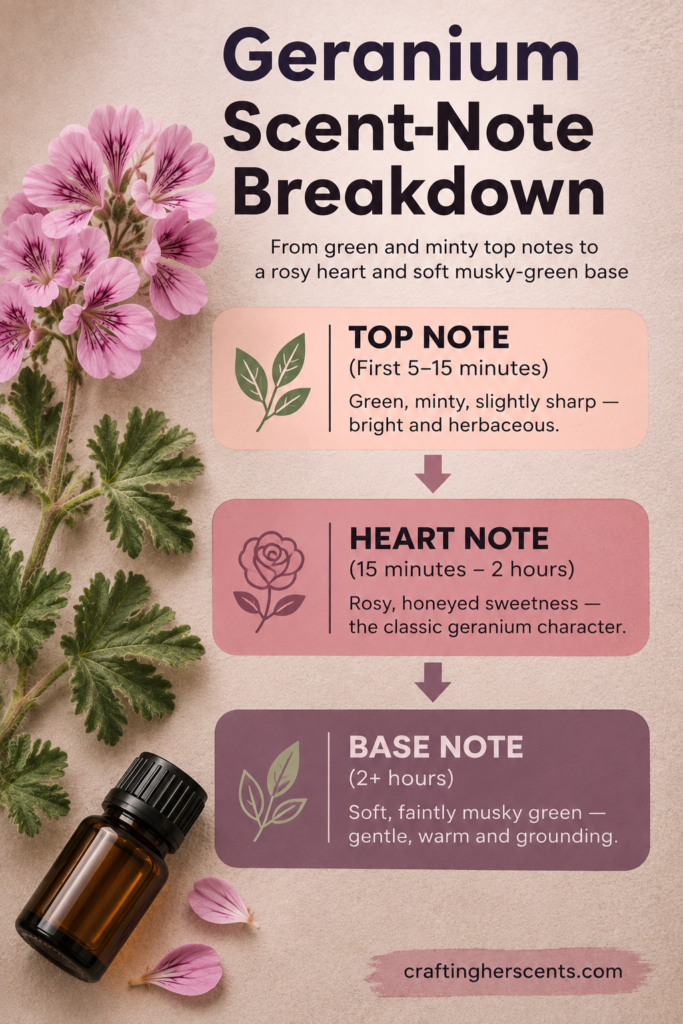
Geranium (Pelargonium graveolens) is often described as “rosy,” and that is fair, but it is more layered than that one word suggests. It opens green and slightly minty, almost sharp, before it settles into something sweeter and more floral.
On the skin or in a diffuser, you will notice the scent shift over time. The opening is bright and a little herbaceous. As it develops, a rosy, honeyed sweetness comes forward. What lingers at the end is a soft, faintly musky green note that is less powdery than true rose oil and a bit fresher.
In perfumery terms, geranium usually sits as a middle or heart note. It bridges brighter top notes like citrus with deeper base notes like sandalwood, which is part of why it is such a workhorse in blending. If you love the idea of rose but find rose oil too heavy or too expensive, geranium is worth exploring. I go into the comparison in more depth in my rose essential oil guide.
Worth knowing: the exact scent varies by where the plant was grown. Oil from Réunion (often labelled “Bourbon geranium”) tends to be greener and more fruity-minty, while Egyptian geranium is usually softer and more classically floral.
🌿 Where It Comes From
True geranium essential oil is steam-distilled from the leaves and stems of Pelargonium graveolens, a scented-leaf geranium in the same broader family as garden geraniums, though it is a different plant to the bedding geraniums you might grow in pots.
The main growing regions for oil production are Egypt, Morocco (particularly around Meknes), China, Réunion (Bourbon geranium), Madagascar, and South Africa, with smaller amounts coming from India and parts of Europe. Soil, climate, and altitude all affect the balance of rosy, green, and minty notes, which is why oils from different origins can smell noticeably different even though they come from the same species.
🔍 Essential Oil vs Geranium-Scented Fragrance Oil
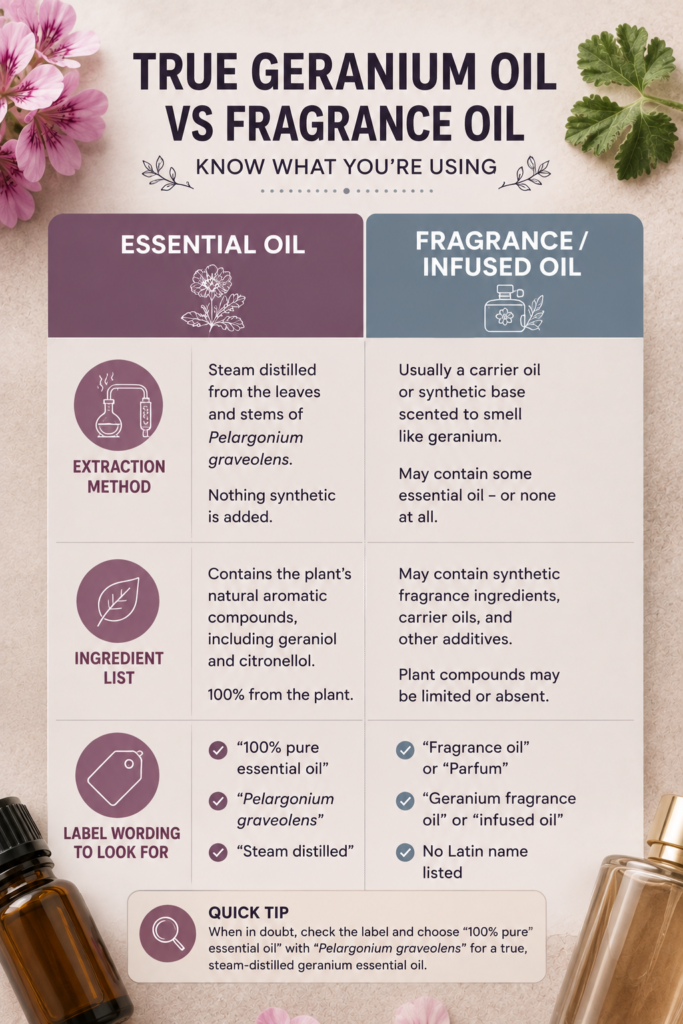
This distinction matters and it is worth being explicit about it. A true geranium essential oil is steam-distilled directly from the plant material and contains the plant’s own aromatic compounds, geraniol and citronellol among them. Nothing synthetic is added.
A “geranium-infused” or “geranium fragrance” oil is a different product. It is usually a carrier oil or synthetic base scented to smell like geranium, sometimes with a touch of real oil blended in, sometimes with none at all. These products can be lovely for candles or perfumery, but they are not essential oils and should not be used the way you would use a true steam-distilled oil.
When you are shopping, check the label for “100% pure essential oil” and the Latin name Pelargonium graveolens. If the label only says “fragrance oil” or “parfum,” it is not the same thing. I cover more label-reading tips in what to look for when buying essential oils.
🌼 Blending Guidance: What Pairs Well With Geranium
Geranium is genuinely one of the friendliest oils to blend with, which is part of why I reach for it so often.
- Citrus (bergamot, sweet orange, grapefruit, lemon): brightens the rosy heart and keeps it from feeling heavy.
- Lavender: softens and rounds out the floral character, a classic pairing for relaxing blends.
- Sandalwood: adds warmth and length, grounding geranium’s greener edges into something that lasts longer on skin or in a room.
A simple starting ratio for a balanced blend is one part citrus, one part geranium, one part sandalwood or lavender. From there, adjust to taste. For topical use, a general dilution of around 2 percent (roughly 12 drops of essential oil per 30ml/1oz of carrier oil) is a reasonable starting point for adults, dropping to 1 percent or less for facial applications or more sensitive skin. If you are new to dilution maths, my guide to carrier oils and my broader essential oil blending post both walk through the basics.
🏡 Practical Ways to Use Geranium at Home
Geranium’s home-fragrance uses are where it really shines. A few of my favourites:
- Diffuser blend: 3 drops geranium, 2 drops sweet orange, 1 drop lavender for a soft, rosy room scent that is not overpowering.
- DIY roll-on: combine 6 to 9 drops of geranium with 10ml of carrier oil (jojoba works particularly well) in a small roller bottle for a personal, skin-safe scent you can carry with you. Amber glass roller bottles are inexpensive and keep the oil better protected from light than clear glass.
- Linen or room spray: mix 15 to 20 drops geranium with 2 tablespoons of witch hazel or high-proof vodka and top up with distilled water in a small spray bottle. Shake before each use.
If a roll-on feels like more commitment than you want, a personal aromatherapy inhaler is a nice middle ground. You add a few drops of oil to the wick inside and get a portable, mess-free way to enjoy the scent without it touching your skin at all.
🛡️ Safety Basics Before You Start
None of this is medical advice, just practical groundwork before you start experimenting.
Always dilute geranium essential oil in a carrier oil before it touches your skin. It should not be applied neat. Do a patch test on a small area of skin, such as the inner forearm, and wait 24 to 48 hours before using a new blend more broadly.
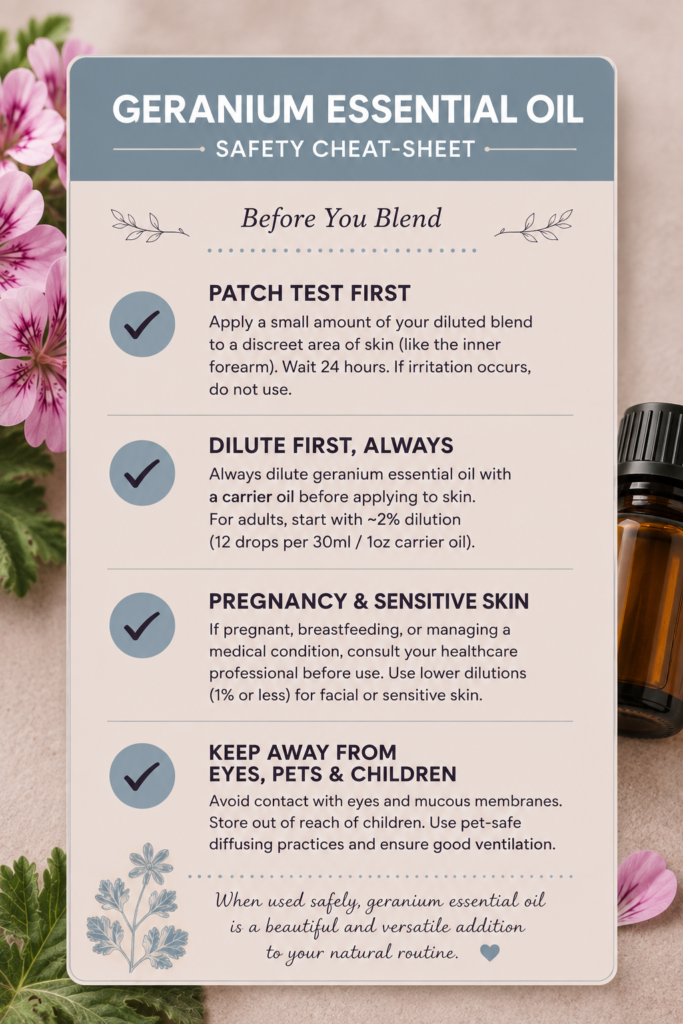
Geranium contains naturally occurring geraniol and citronellol, both recognised as potential skin sensitisers, so patch testing matters even if you have used essential oils before without issue. If you are pregnant or breastfeeding, aromatherapy guidance generally recommends being more cautious with essential oils overall, including geranium, and using lower dilutions or avoiding certain oils altogether. It is worth checking with a qualified aromatherapist or your midwife or doctor before use. The same caution applies if you have particularly reactive or sensitive skin, or a diagnosed skin condition.
Keep essential oils away from eyes and mucous membranes, out of reach of children and pets, and never taken internally.
Final Thoughts
Geranium is one of those oils that rewards you for slowing down and actually noticing it, rather than treating it as an interchangeable “floral” in a blend. Once you know its rosy-green-minty signature and how it shifts over time, you will start spotting it in commercial perfumes too.
Start with a small, well-diluted blend, patch test it, and give yourself permission to adjust the ratios until it smells like something you actually want to wear or diffuse.


