I sometimes use affiliate links in content. This doesn’t cost you anything but I may make a commission payment from anything you buy through these links. As an Amazon Associate I earn from qualifying purchases. All opinions remain my own.
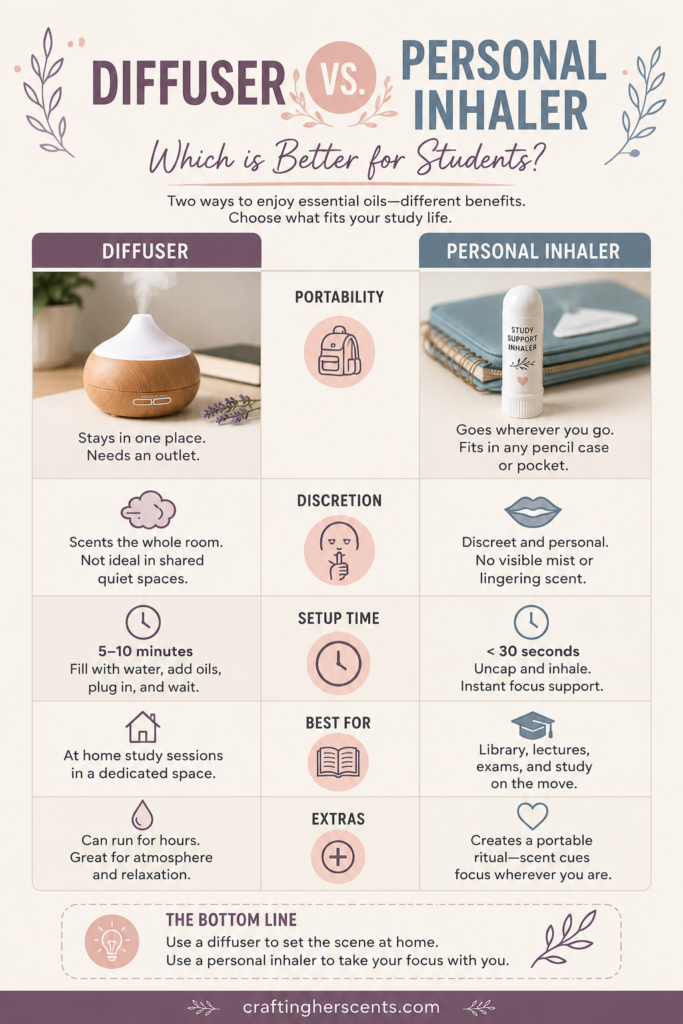
I love a good diffuser blend, but when I’m actually sitting down to study or work through a stack of papers, a diffuser rarely makes sense. It needs an outlet, it scents the whole room whether I want it to or not, and it definitely isn’t coming with me to the library. That’s exactly why I’ve been reaching for personal aromatherapy inhalers this back-to-school season, and this one, built around this month’s spotlight oil, is quickly becoming my favourite.
Table of Contents
📚 What Is a Personal Aromatherapy Inhaler?
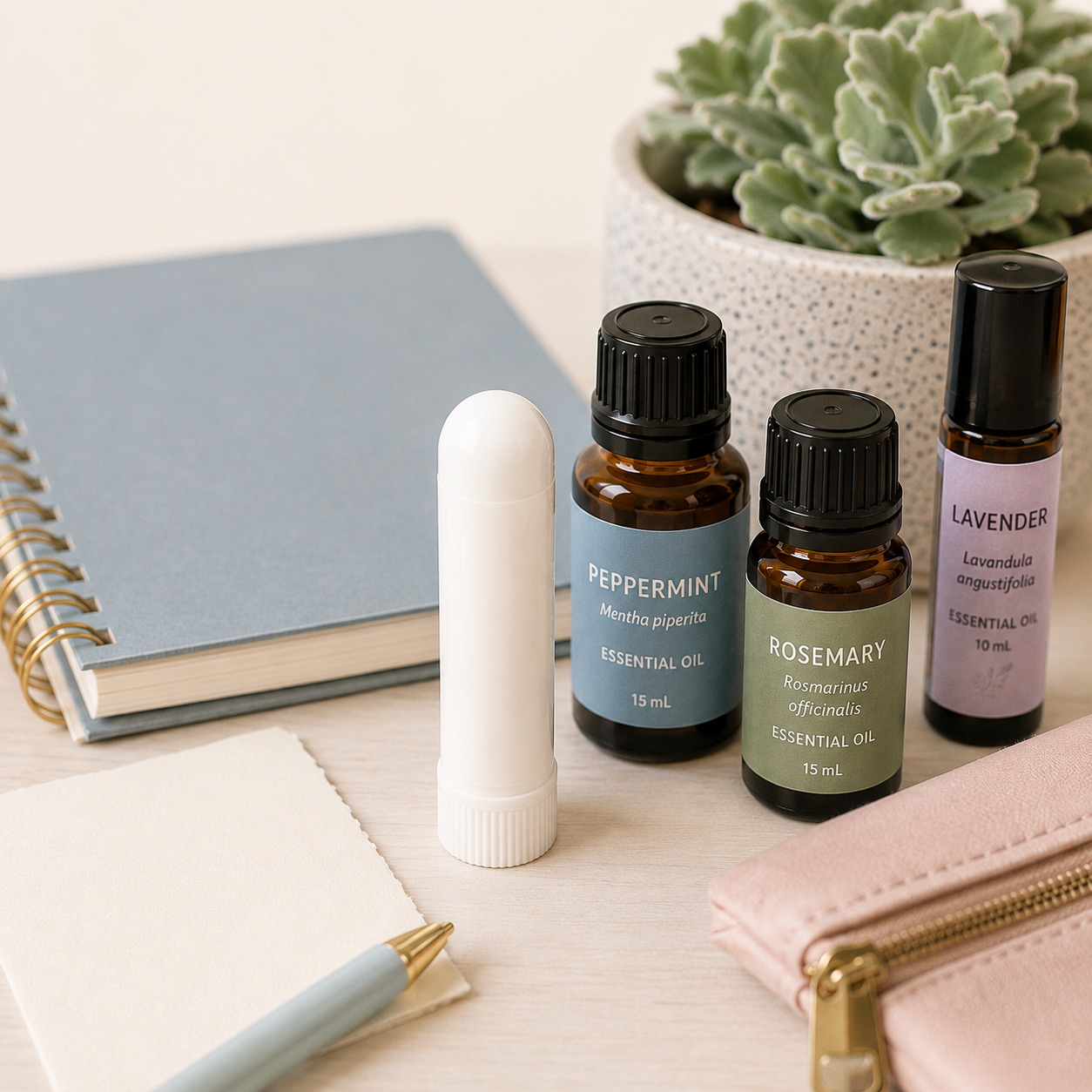
A personal aromatherapy inhaler is a small, portable tube, usually just a few centimetres long, that holds a cotton wick soaked in your chosen essential oil blend. You uncap it, hold it near your nose, and breathe in. No outlet, no water, no waiting for a room to fill with scent.
For students, that portability is the whole point. An inhaler fits in a pencil case, slides into a backpack pocket, and works just as well at a library desk or in an exam hall as it does at your kitchen table. It’s discreet, too, since there’s no visible mist or lingering room scent to explain to anyone nearby.
Why This Format Beats a Diffuser Blend for Studying
A diffuser blend is lovely for a dedicated study room, but it falls apart the moment you need to move. An inhaler goes wherever you go, which means the ritual of “time to focus” can travel with you instead of being tied to one spot in your home.
🌿 The Blend: Frankincense as the Base
This month’s spotlight oil is frankincense, and it’s an especially fitting base for a study blend. Frankincense has long been associated with grounding, steady breathing, and a sense of calm focus, which makes it a natural anchor scent for a blend you’ll be reaching for during stressful study sessions. You can read more about its background and traditional uses in our full guide to frankincense essential oil.
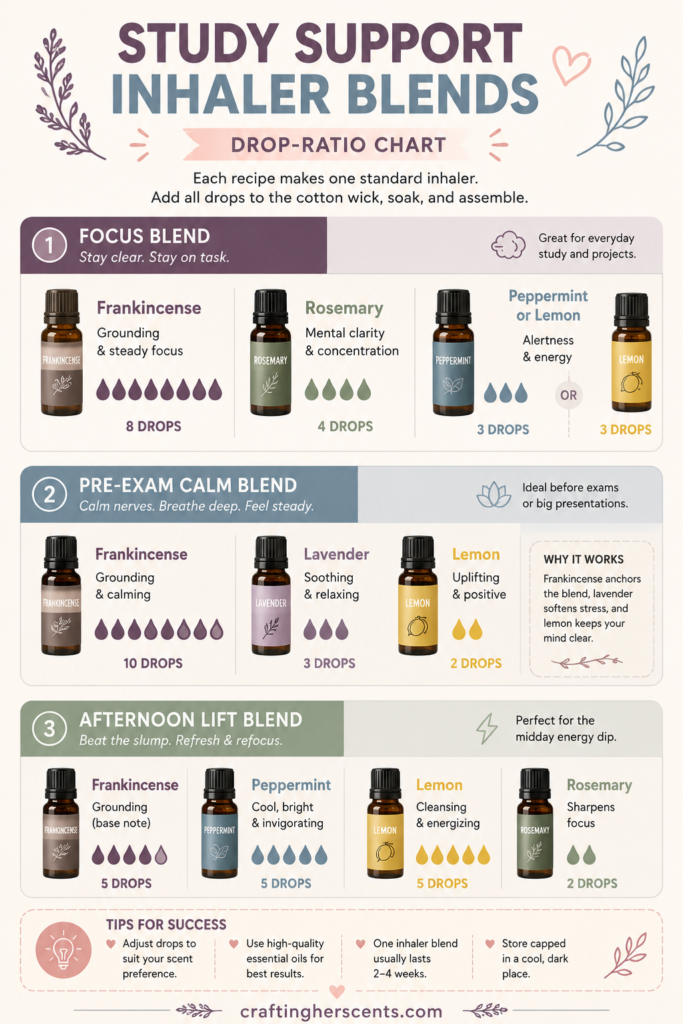
To build out the blend, pair frankincense with two or three complementary oils. Rosemary is a classic pairing for mental clarity rituals, peppermint adds a brightening, awake feeling, and lemon rounds things out with a clean, uplifting note. A starting ratio that works well in a standard inhaler is 8 drops of frankincense, 4 drops of rosemary, and 3 drops of peppermint or lemon, though you can adjust the balance based on which scent you’re most drawn to.
If you want to explore other focus-oriented combinations beyond this one, our roundup of mood-enhancing and focus-boosting essential oil blends is a good next stop.
A Note on Personal Preference
Scent preference is personal, so treat these ratios as a starting point rather than a rule. If rosemary feels too sharp for you, lean more heavily on frankincense and lemon instead. The goal is a blend you’ll actually want to reach for, not one that follows a recipe perfectly.
🧪 How to Assemble Your Inhaler
Putting together a personal inhaler takes about five minutes and requires only a few supplies: a blank inhaler tube (these typically come with an outer casing, an inner chamber, a cotton wick, and a cap), a small glass or stainless steel mixing bowl, and a metal spoon or spatula. Avoid plastic tools, since concentrated essential oils can degrade certain plastics over time.
- Blend your oils. Combine your frankincense, rosemary, and peppermint or lemon drops in your mixing bowl and stir gently with your metal spoon.
- Soak the wick. Place the cotton wick into the bowl and use your spoon to press it gently so it absorbs the blend evenly. It should be thoroughly saturated but not dripping.
- Insert the wick. Using tweezers, transfer the soaked wick into the inner chamber of your inhaler tube.
- Cap and label. Snap the cap on and label the tube with the blend name and date, since scent can fade over several weeks of regular use.
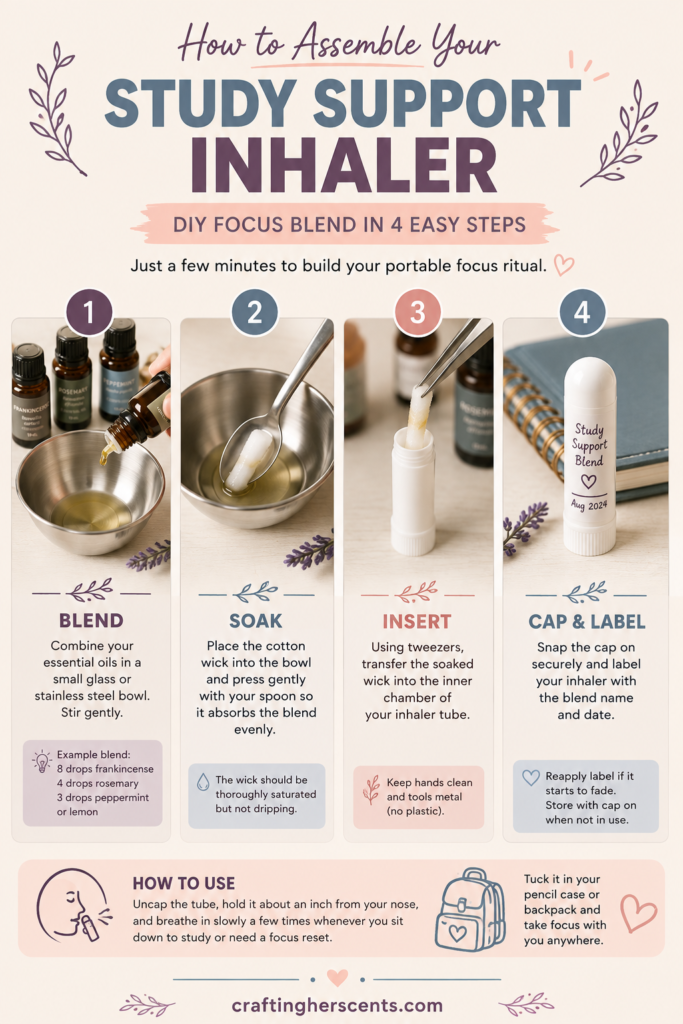
To use it, simply uncap the tube, hold it about an inch from your nose, and breathe in slowly a few times whenever you sit down to study or feel your focus starting to drift.
🎒 Working It Into Your Study Routine
The real value of an inhaler blend isn’t just the scent, it’s the ritual you build around it. Many students find it helpful to pair a specific scent with the start of a study session, so the smell itself becomes a cue that it’s time to settle in and focus, similar to how a particular playlist or a cup of tea can signal the same thing.
Keep your inhaler in your pencil case or backpack side pocket so it’s on hand during a library session, a lecture, or an exam. A single well-made inhaler blend typically holds its scent for several weeks with regular use, so you shouldn’t need to remake it more than once or twice a term.
🔄 Variations for Different Study Moods
Once you’ve got the basic method down, it’s easy to build a small rotation rather than relying on one single blend all term. For a calmer, pre-exam version, lean heavier on frankincense and swap the peppermint for a drop of lavender instead, which softens the overall feel while keeping the grounding base intact. For an afternoon-slump version, when you need more of a lift than a calm-down, increase the lemon and peppermint slightly and use a lighter hand with the frankincense.
It’s worth making two or three inhalers at once if you go this route, one for focus, one for pre-exam calm, and labelling them clearly so you’re not guessing which is which halfway through a study session.
❓ Frequently Asked Questions
How long does an inhaler blend last? Most well-saturated blends hold their scent for two to four weeks of regular use before they need refreshing. Keeping the cap on tightly between uses helps the scent last longer, since the wick dries out faster if it’s left open.
Can I bring this into an exam hall? Policies vary by school and exam board, so it’s worth checking with your invigilator or student handbook ahead of time. Many students find it easier to use their inhaler in the minutes before entering the exam room rather than during the exam itself.
Can I make one blend and share it with a friend? It’s best to make individual inhalers rather than sharing one, both for hygiene reasons and because scent preference is so personal. The good news is that a full set of ingredients usually makes several inhalers, so it’s easy to batch a few at once for friends or family.
What if I don’t like the smell of frankincense on its own? That’s common, since frankincense can read as slightly resinous or woody to some people. Leaning more heavily on the lemon and rosemary in your ratio, while keeping frankincense as a smaller supporting note, usually solves this without losing the grounding effect entirely.
⚠️ Safety Notes
Essential oils are for external inhalation only in this format. Never ingest essential oils, and don’t apply the undiluted blend directly to skin. Inhalers don’t require dilution the way topical blends do, since the oil never touches skin directly, but it’s still worth being thoughtful about oil selection for younger teens, as some oils (including certain high-potency ones like wintergreen or oils with strong contraindications) are best avoided for younger users or anyone with respiratory sensitivities.
This blend is meant as a calming, focus-supporting ritual, not a treatment for anxiety, ADHD, or any other condition, and it isn’t a substitute for the study habits, sleep, and breaks that actually make the biggest difference during a demanding term. If you have asthma, are pregnant, or have any respiratory condition, it’s worth checking with a healthcare provider before introducing a new essential oil blend into your routine.
Final Thoughts
A personal inhaler is one of the simplest DIY projects in the essential oil world, and it happens to be perfectly suited to the portable, no-fuss reality of student life. This frankincense-based blend is a calm, grounding companion for exam season, a long library stretch, or just a Tuesday afternoon of catching up on reading. Keep it simple, keep it in your bag, and let the ritual of reaching for it do some of the work.
Have you tried a study blend before? I’d love to hear what scent combinations have worked for your focus rituals.