
I sometimes use affiliate links in content. This doesn’t cost you anything but I may make a commission payment from anything you buy through these links. As an Amazon Associate I earn from qualifying purchases. All opinions remain my own.
A full-size diffuser is lovely at home, but it doesn’t travel well. It needs a plug, a flat surface, and a room willing to sit still and absorb the scent, none of which describes a train carriage, a desk at work, or the inside of a handbag. If you want your favourite blend with you outside the house, you need something wearable or pocket-sized instead.
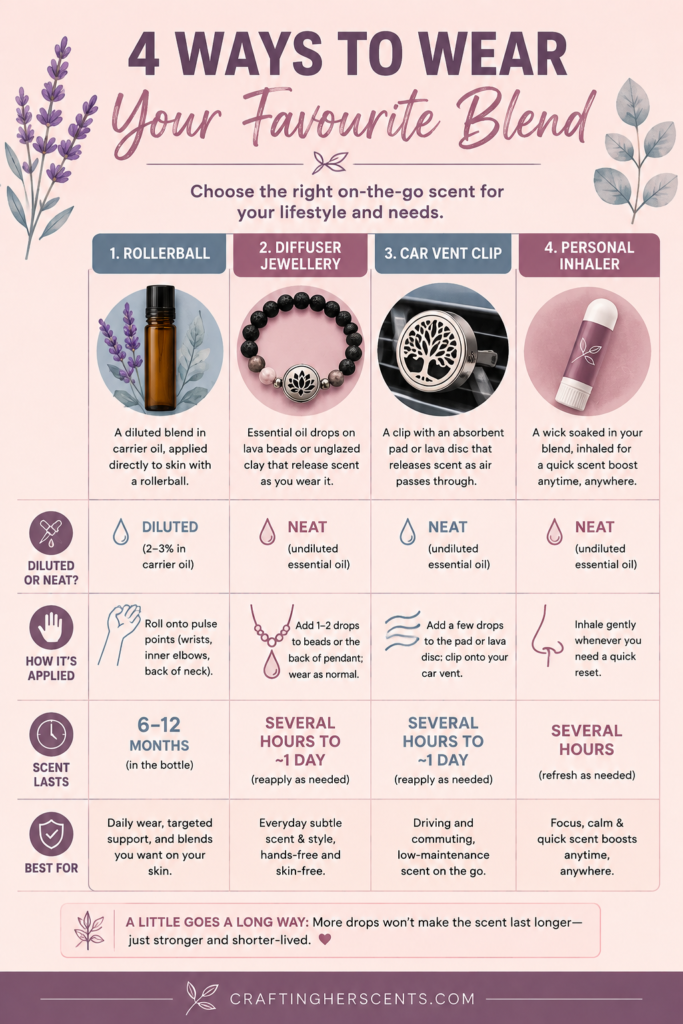
This guide walks through the main formats for personal, on-the-go scent (rollerballs, diffuser jewellery, car vent clips, and personal inhalers), plus a simple DIY recipe for the two you’re most likely to want to make yourself.
Table of Contents
🎒 The Formats, at a Glance
Rollerballs are a diluted essential oil blend in a carrier oil, applied directly to skin with a rollerball applicator. They’re the most flexible option and the easiest to make at home, which is why we’ll cover the full recipe below.
Diffuser jewellery (lava bead bracelets and necklaces, or unglazed clay pendants) works differently. A few drops of neat essential oil go directly onto the porous bead or clay, not diluted, and the scent releases slowly into the air around you as you wear it rather than sitting on your skin.
Car vent clips hold a small absorbent pad or lava disc that clips onto an air vent, releasing scent as air passes through. They’re the lowest-maintenance option of the four, and mostly a buy-don’t-DIY item.
Personal inhalers are small tubes with a cotton wick soaked in blend, sniffed rather than worn. We’ve covered these in detail in our guide to personal aromatherapy inhalers, including a full study-focused DIY inhaler blend if you want a ready-made recipe to start from.
🧴 DIY Rollerball Recipe
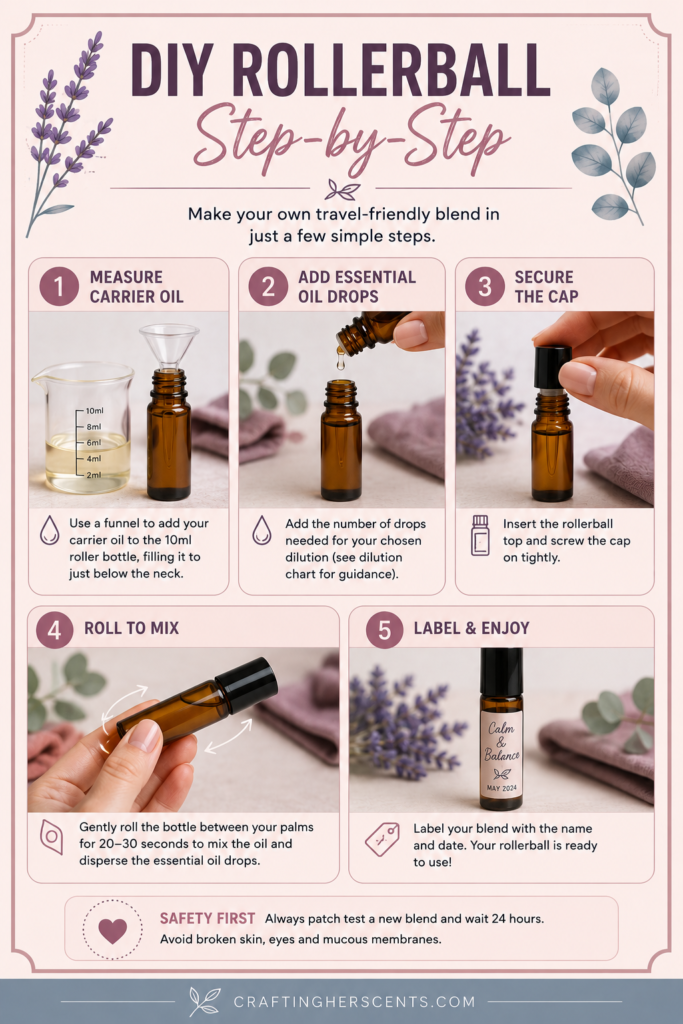
A 10ml roller bottle is the standard size for a personal blend, and it’s small enough to slip into a bag without taking up much room.
What you’ll need: a 10ml amber glass roller bottle, your chosen essential oil(s), and a carrier oil such as fractionated coconut oil or sweet almond oil. Amber glass isn’t just for looks either, it protects the oil from light degradation better than clear glass does, which matters if the bottle is going to live in a bag exposed to daylight.
Dilution ratio. For everyday wear on healthy adult skin, a 2 to 3% dilution is a sensible general-purpose starting point, which works out to roughly 6 to 8 drops of essential oil topped up with carrier oil in a 10ml bottle. Roll the ball on to mix once the cap is sealed rather than shaking vigorously, which can create air bubbles that make the roller stick.
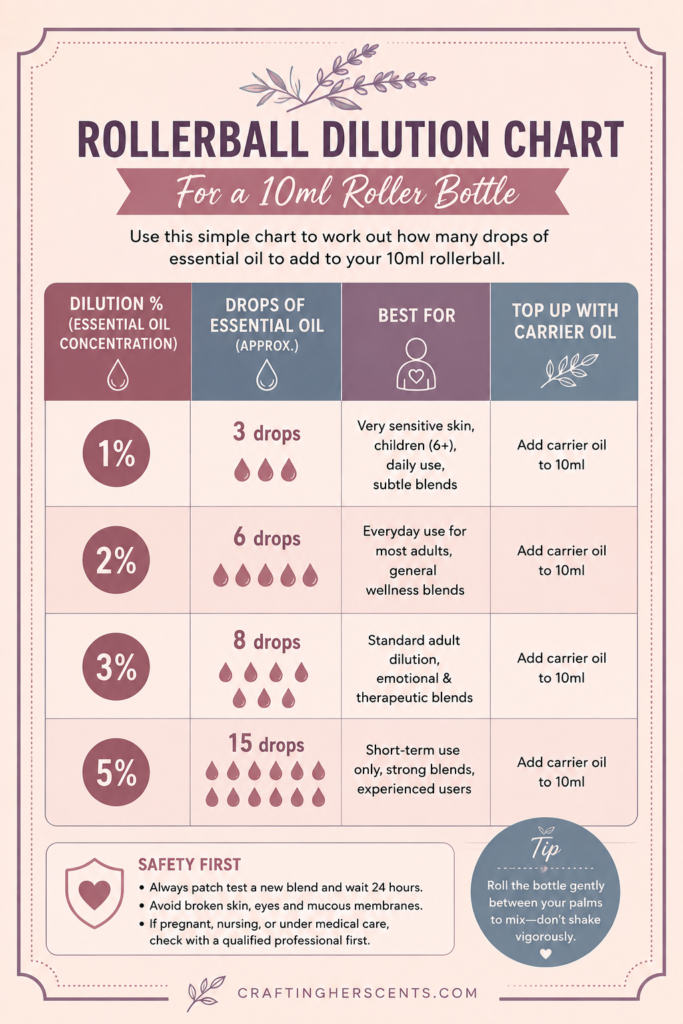
Application areas. Pulse points (wrists, inner elbows, back of the neck) work best, since they generate a little natural warmth that helps the scent lift throughout the day. Avoid broken skin, eyes, and mucous membranes, and always patch test a new blend on a small area of skin (like the inner forearm) and wait 24 hours before wider use, especially if you have sensitive skin or a history of reactions.
Shelf life. A rollerball blend in carrier oil typically lasts 6 to 12 months, depending on the carrier oil used (fractionated coconut oil has a notably longer shelf life than most others). Label the bottle with the blend and the date you made it, since scent alone isn’t a reliable way to judge whether a blend has turned.
For more on choosing and understanding carrier oils generally, our guide to carrier oils and how they work is worth a read before your first batch, and our piece on how to apply essential oils covers a couple of other application methods if rollerballs aren’t quite your thing.
📿 DIY Diffuser Jewellery
Lava bead and unglazed clay diffuser jewellery works on a simple principle: porous, unglazed material soaks up neat essential oil and releases it slowly as you move and warm up over the course of a day.
To make your own: start with a lava bead bracelet, necklace, or clay pendant blank (widely available and inexpensive from craft and jewellery suppliers). Add one or two drops of neat essential oil directly to a bead or the back of the pendant, let it sit for a minute to absorb, and wear as normal. Unlike a rollerball, this format uses undiluted oil, so a little genuinely goes a long way, and more drops won’t make the scent last longer, just stronger and shorter-lived.
Scent typically lasts anywhere from several hours to about a day depending on the oil and how porous the material is, and it fades gradually rather than stopping abruptly, so you’ll know when it’s time to reapply.
🚗 Car Vent Diffuser Clips
This is the one format in this guide that’s genuinely easier to buy than make. A car vent clip holds a small felt pad or lava disc, and you add a few drops of neat oil to the pad the same way you would with jewellery.
If you already have lava bead diffuser jewellery, the same absorbent-material principle applies here, so there’s no need to buy a specialist product if you’d rather repurpose what you have. Just be mindful that some oils, particularly citrus oils, can leave a residue on plastic vent clips over time, so a swap-in pad or a quick wipe-down now and then keeps things tidy.
⚠️ Safety Notes Before You Start
A few safety basics apply across all of these formats, worth reading properly rather than skimming.
- Dilute for skin contact. Rollerballs go on skin, so they need proper dilution in a carrier oil. Diffuser jewellery and car clips don’t touch skin directly, so neat oil is appropriate there, but never apply a “neat” jewellery blend to skin the way you would a rollerball.
- Watch citrus and other sun-sensitive oils. Bergamot, lemon, lime, and other cold-pressed citrus oils can increase skin sensitivity to sunlight when applied topically. If a rollerball blend includes one of these, keep the application area covered or out of direct sun for the rest of the day.
- Patch test anything new. A small dab of diluted blend on the inner forearm, left for 24 hours, is worth the wait before wearing a new blend more widely, especially for skin-contact formats.
- Keep it out of reach of children and pets, particularly neat-oil formats like diffuser jewellery, where the concentration is higher than a diluted rollerball.
🌿 A Note on Essential Oil vs. Infused Oil
Everything in this guide assumes you’re working with true essential oils (steam-distilled or cold-pressed, concentrated plant extracts), not infused oils (a carrier oil steeped with plant material, which is a different product with a much lower concentration of active compounds). The two aren’t interchangeable in these recipes. An infused oil won’t dilute the same way in a rollerball, and it won’t release scent from a lava bead the way a true essential oil does, since it doesn’t carry the same concentration to begin with.
If you’re not sure which you’re working with, our guide on how to make lavender essential oil at home walks through exactly this distinction, since it’s one of the most common mix-ups in home aromatherapy content. When in doubt, check the label or, better, buy from a supplier that’s explicit about their extraction method. Our general guide on what to look for when buying essential oils covers this in more depth.
📦 Building Your On-the-Go Kit
You don’t need all four formats at once. A rollerball covers most everyday situations, and it’s the easiest to make yourself, so it’s the sensible place to start if you’re only trying one thing from this guide. Add diffuser jewellery if you want scent without anything touching skin, or a car clip if your commute is where you’d get the most use out of it.
Whichever format you start with, the same two rules carry across all of them: dilute anything that touches skin, and always know whether you’re working with a true essential oil or an infused one before you begin.


