I sometimes use affiliate links in content. This doesn’t cost you anything but I may make a commission payment from anything you buy through these links. As an Amazon Associate I earn from qualifying purchases. All opinions remain my own.
There’s something grounding about reaching for a little rollerball on the days when everyone around you seems to be sniffling. This isn’t about stopping a cold in its tracks, it’s about the small, comforting ritual of rolling on a blend you made yourself before you head out the door. If you’re already comfortable mixing your own oils, this is a simple one to add to your seasonal rotation.
Table of Contents
🌿 What “Immune Support” Actually Means Here
Let’s set expectations upfront: nothing in this post will prevent, treat, or cure a cold or the flu. That’s not how essential oils work, and any blend claiming otherwise isn’t being straight with you.
What this roller does offer is the traditional, ritual side of aromatherapy. Certain oils have long been reached for during cold-and-flu season simply because people find the scent bracing, comforting, or grounding when everything else feels a bit run down. Think of it as a small self-care habit, not a substitute for rest, fluids, or seeing a doctor when you need one.
🧪 The Blend: Oils to Reach for This Season
This recipe uses four oils that show up again and again in seasonal blending for exactly this reason: tea tree, eucalyptus, lemon, and clove bud.
- 4 drops tea tree
- 4 drops eucalyptus
- 4 drops lemon
- 2 drops clove bud
That’s 14 drops total, which puts you at roughly a 3% dilution in a 10ml roller bottle, a sensible middle ground for adult, short-term body use. If you have sensitive skin, drop down to 8-10 drops total for closer to a 2% blend.
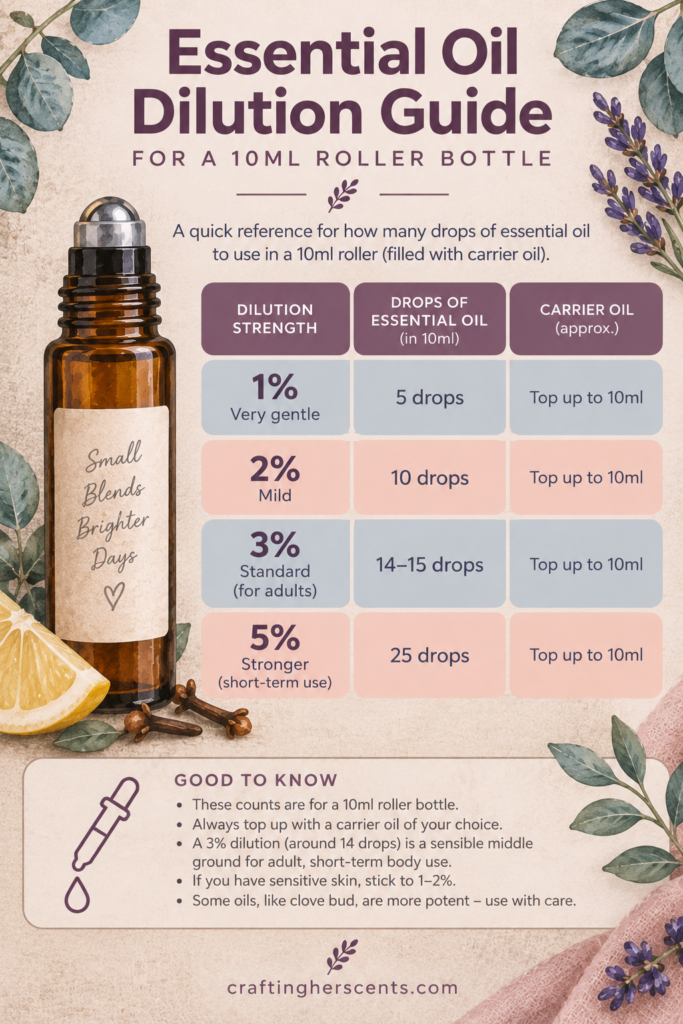
Clove bud is the one to go easy on. It’s one of the more potent oils on this list, and a little goes a long way both in scent and in skin sensitivity. If you don’t already have it on hand, you can leave it out entirely and simply add one more drop each of tea tree and lemon instead.
🫙 Essential Oil vs. Infused Oil (Quick Refresher)
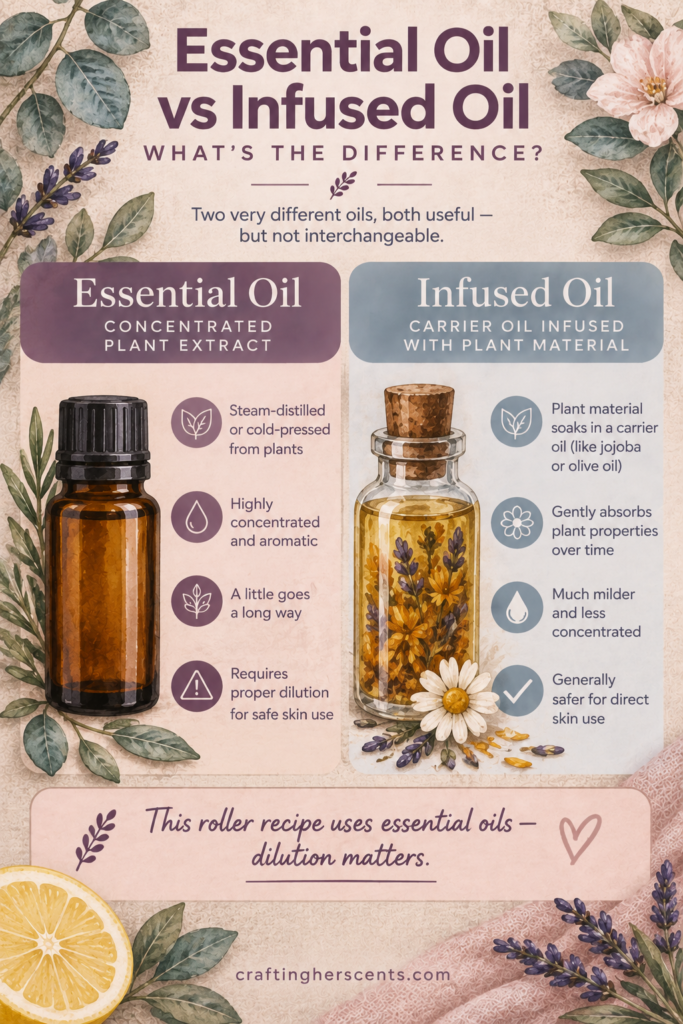
Worth clarifying before you start: the essential oils in this recipe are steam-distilled or cold-pressed extracts of the plant, not the same thing as an infused oil, where a carrier oil sits with plant material to slowly absorb its properties. Infused oils are generally milder and don’t carry the same concentration or safety considerations as true essential oils. This roller uses genuine essential oils, which is exactly why the dilution step below isn’t optional.
🎯 How to Roll It Together
You’ll need a 10ml amber glass roller bottle, your four oils, and a carrier oil of your choice.
- Add your essential oil drops to the empty roller bottle first, following the ratios above.
- Top the bottle up with carrier oil, leaving a small gap below the neck so the roller ball has room to seat properly.
- Pop the roller ball and cap on, then roll the bottle gently between your palms to combine (skip the shaking, it can introduce tiny air bubbles that make the roller stick).
- Label the bottle with the date and contents. It’s an easy step to skip and an easy one to regret three months from now.
If you’re not sure which carrier oil to use, our guide to carrier oils walks through the common options and how they behave on skin. And if this is your first time building a blend from scratch rather than following a recipe exactly, how to mix essential oils covers the fundamentals of layering top, middle, and base notes.
⚠️ Safe Use Notes
A few things worth sitting with before you roll this on:
- Patch test first. Apply a small amount to your inner forearm and wait 24 hours before using it more widely, especially with tea tree and clove bud in the mix, both of which are more likely than average to cause skin irritation or sensitisation with repeated use.
- Roll it onto pulse points, wrists, chest, or the soles of the feet, not your face, and never near eyes or mucous membranes.
- Not for young children as-is. This blend is formulated for adult skin at adult dilution. Don’t assume you can simply add fewer drops to make it child-safe; several of these oils, eucalyptus in particular, aren’t recommended for young children without guidance from someone qualified in paediatric aromatherapy.
- Don’t ingest it. This is a topical, aromatic blend only.
- Give your skin a break. Rotate this blend with something else in your collection rather than wearing it daily for weeks on end, which reduces the sensitisation risk that builds with repeated exposure to the same oils.
If you’d rather skip the topical route altogether, our roundup of wearable essential oil diffusers covers rollerball necklaces, diffuser jewellery, and other ways to carry a scent with you without it touching your skin at all.
🔄 Customizing the Blend
Once you’ve made this a couple of times, it’s worth treating it as a starting template rather than a fixed formula. The four oils here were chosen because they’re commonly reached for together in cold-season blending, but plenty of reasonable substitutions exist if your collection looks different.
Rosemary is a common swap for a portion of the eucalyptus if you find the scent too sharp on its own, and it brings a slightly herbal, grounding note to the blend. Cinnamon leaf (not cinnamon bark, which is considerably harsher on skin) can stand in for part of the clove bud if you want a warmer, spicier profile without increasing the overall potency. Peppermint is another option some people like to add in place of one drop of eucalyptus for a cooler, brighter feel, though it’s worth patch testing separately since peppermint carries its own sensitivity considerations.
Whatever you swap in, keep the total drop count roughly the same so you’re not accidentally pushing the dilution higher than intended. Small, deliberate changes are the easiest way to make this recipe genuinely yours without overcomplicating the ratios.
🗓️ When to Reach for This
This isn’t a blend you need to wear daily to get anything out of it, and treating it that way works against the skin-rest advice further down. Instead, think of it as something to keep within reach for the moments that actually call for it.
A few natural touchpoints: rolling it onto your wrists before a commute during a particularly sniffly week at the office, keeping it on your bedside table for a slow morning when the season is shifting, or tucking it into a bag before a flight, when recycled cabin air and close quarters make people reach for a bit of extra comfort. None of these are claims that the blend does anything measurable in those situations. It’s simply that the ritual of rolling on a scent you associate with taking care of yourself can be worth something on its own, separate from any question of efficacy.
If you find yourself wanting to wear it every single day regardless, that’s usually a sign to rotate in a different blend for a while rather than push through with the same oils on repeat.
📦 Storage and Shelf Life
Keep your finished roller somewhere cool and dark. A bathroom cabinet or bedside drawer works better than a sunny windowsill, since heat and light both speed up oxidation.
A blend like this is generally good for six to twelve months, though citrus oils like lemon tend to be the first to fade in both scent and potency. If you want the fuller picture on how long individual oils last and how to tell when one’s past its best, our guide to essential oil shelf life is worth a read.
Give the bottle a gentle roll before each use to redistribute the oils, since separation is completely normal and not a sign anything’s gone wrong.
Keep this one in your bag or on your desk through the colder months, and let the ritual of rolling it on be the point, not a promise about what it will or won’t do for you.