I sometimes use affiliate links in content. This doesn’t cost you anything but I may make a commission payment from anything you buy through these links. As an Amazon Associate I earn from qualifying purchases. All opinions remain my own.
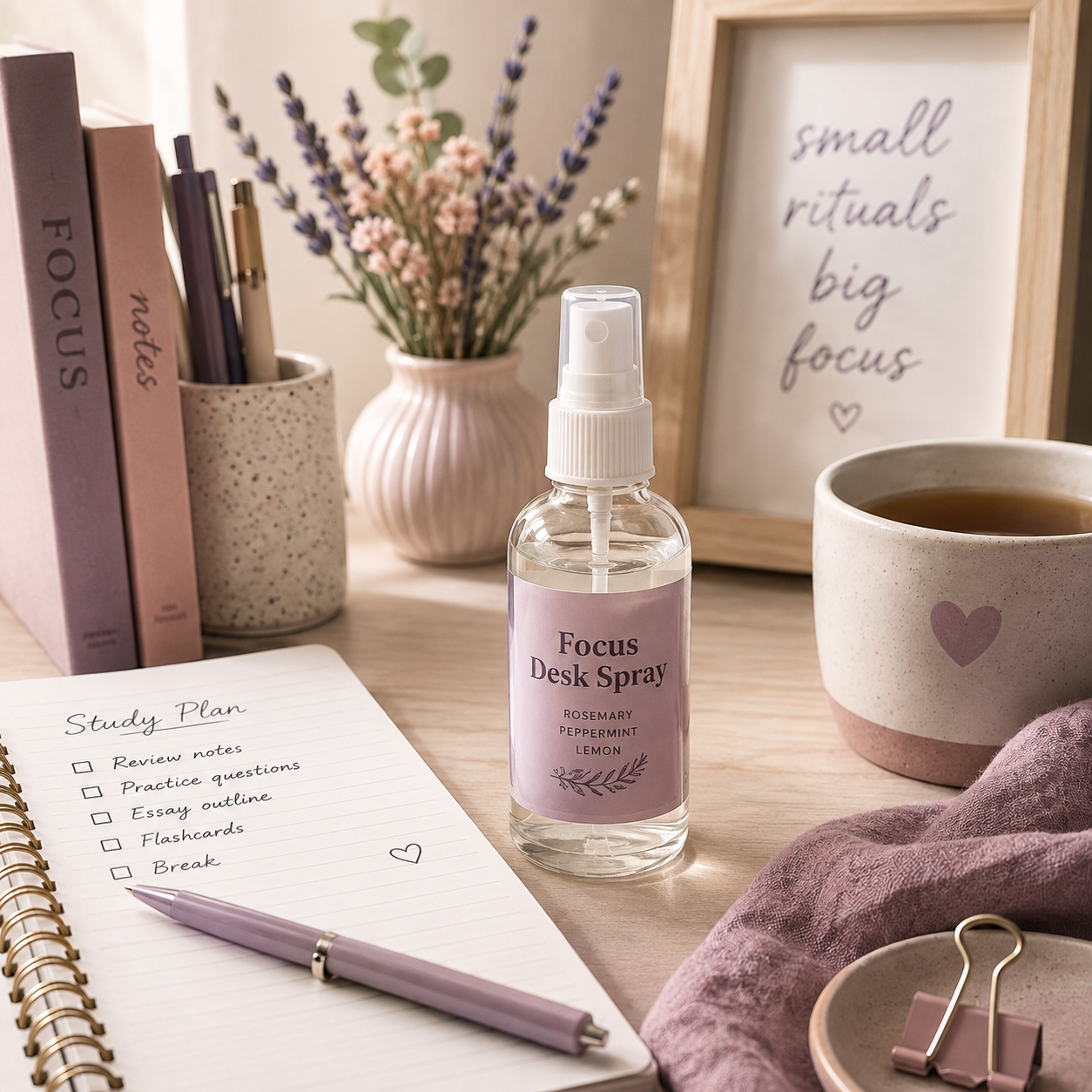
Back-to-school season means a lot of us are trying to build some kind of study routine again, and a simple desk spray is one of the easiest DIY projects to add to that routine. This is a straightforward blend you spray around (not on) your workspace before you sit down, as part of settling into study mode.
One thing upfront: this spray is about building a nice, consistent atmosphere for your study sessions, not a shortcut to better focus. Nothing in a bottle can do the concentrating for you. Think of it the same way you’d think of tidying your desk or making a cup of tea before you start: a small ritual that signals “okay, it’s study time,” rather than something with a direct effect on your brain.
Table of Contents
🌿 Essential Oil, Not Infused Oil
Quick but important distinction before we start: this recipe uses true essential oils (steam-distilled or cold-pressed plant extracts), not infused oils (a carrier oil steeped with plant material, like homemade herb-infused olive oil). They behave completely differently in a spray recipe, and infused oils won’t disperse or diffuse a scent through a room the way essential oils do. If you’re not sure which you’re working with, check the label. A genuine essential oil bottle will say “essential oil,” not “infused” or “herbal oil.”
🧴 What You’ll Need
- A small spray bottle (2 oz / 60 ml is a good desk-friendly size)
- Distilled water
- Witch hazel (this acts as a dispersant, so the oil doesn’t just sit in oily droplets on top of the water)
- Your essential oil blend (see below)
🌸 The Blend
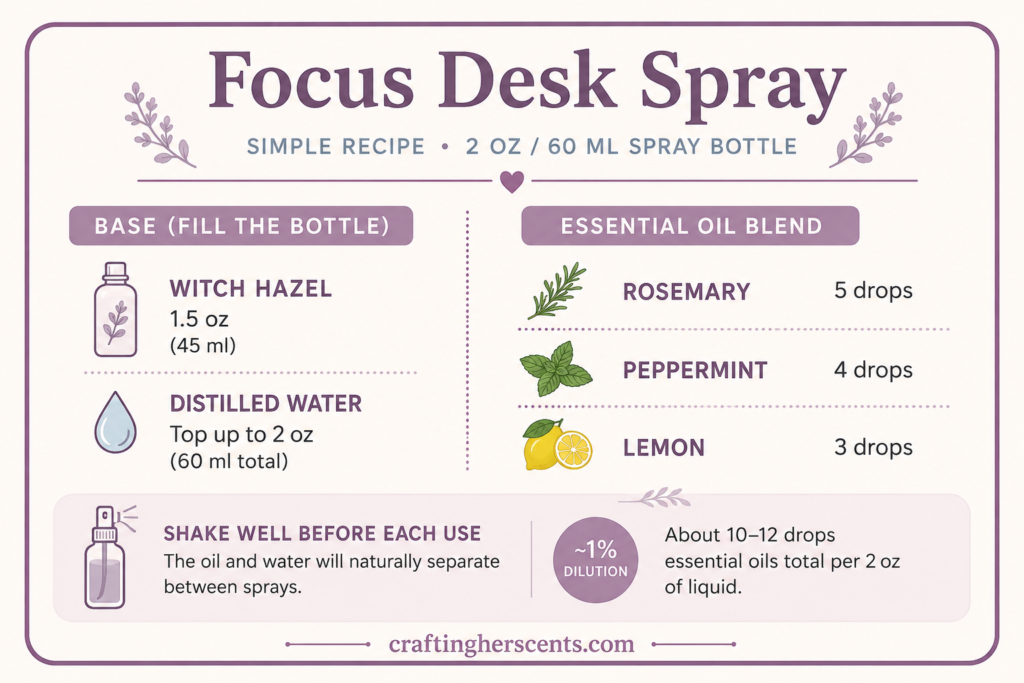
For a light, desk-friendly spray, a roughly 1% dilution is the standard starting point: about 10 to 12 drops of essential oil total per 2 oz of liquid. Fill your bottle with around 1.5 oz of witch hazel and top up with distilled water, then add your drops.
A simple study-desk combination to start with: 5 drops rosemary, 4 drops peppermint, 3 drops lemon. All three are popular “clean, energising” scents for a workspace, without leaning into any heavier florals that can feel a bit much in a small room. Shake well before every use since the oil and water will naturally separate between sprays.
⚠️ Safety Notes
A few things worth taking seriously here, not to be alarmist but because they matter:
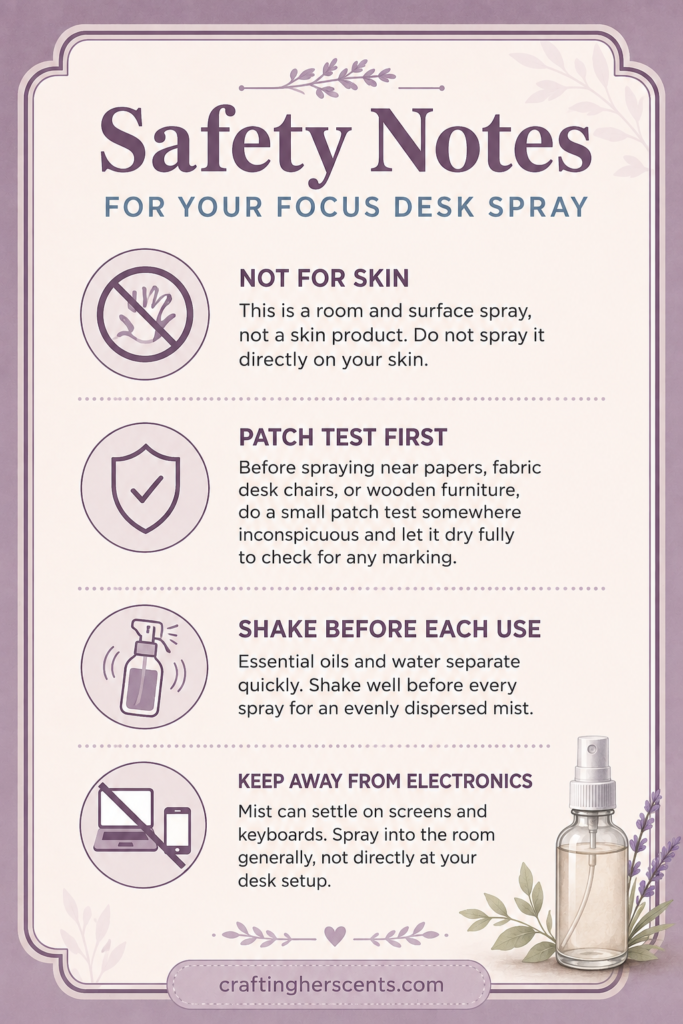
- This is a room and surface spray, not a skin product. Don’t spray it directly on your skin. If you want an on-skin version, that needs a completely different, much more diluted recipe designed for topical use.
- Test on fabric and surfaces first. Before spraying near papers, fabric desk chairs, or wooden furniture, do a small patch test somewhere inconspicuous and let it dry fully to check for any marking.
- Shake before each spray. Essential oils and water separate quickly, and an unshaken bottle can release a stronger, undiluted spot of oil rather than an evenly diffused mist.
- Keep it away from laptops, phones, and other electronics. Mist can settle on screens and keyboards, so spray into the room generally rather than directly at your desk setup.
🗄️ Storage and Shelf Life
Keep your finished spray in a cool spot out of direct sunlight. A glass bottle holds up better than plastic for long-term storage since essential oils can degrade some plastics over time. Made this way, a desk spray should stay good for a few months; if the scent starts to smell noticeably different or “off” compared to when you made it, it’s time for a fresh batch. Because this recipe doesn’t include a strong preservative system, treat it as something you top up seasonally rather than a shelf-stable product you’ll have for years.
📚 Building It Into a Study Routine
The spray works best as one small piece of a repeatable routine rather than a standalone fix. A lot of people pair a desk spray with a specific playlist, a set start time, or a cup of tea, so the scent becomes one more cue your brain associates with “we’re settling in to work now.” If you’d rather carry a scent with you than spray a room, our Study Support Inhaler is a portable version of the same idea, useful for libraries or shared spaces where a room spray isn’t practical. And if you want a broader set of blends built around the same general idea, Mood-Enhancing and Focus-Boosting Essential Oil Blends has several more combinations worth trying.
If you’re new to essential oils generally, it’s worth reading Essential Oil Basics for Beginners before you start building your own blends from scratch, and Ready to Begin Blending Essential Oils? walks through dilution ratios and blending principles in more depth than we’ve covered here.