I sometimes use affiliate links in content. This doesn’t cost you anything but I may make a commission payment from anything you buy through these links. As an Amazon Associate I earn from qualifying purchases. All opinions remain my own.
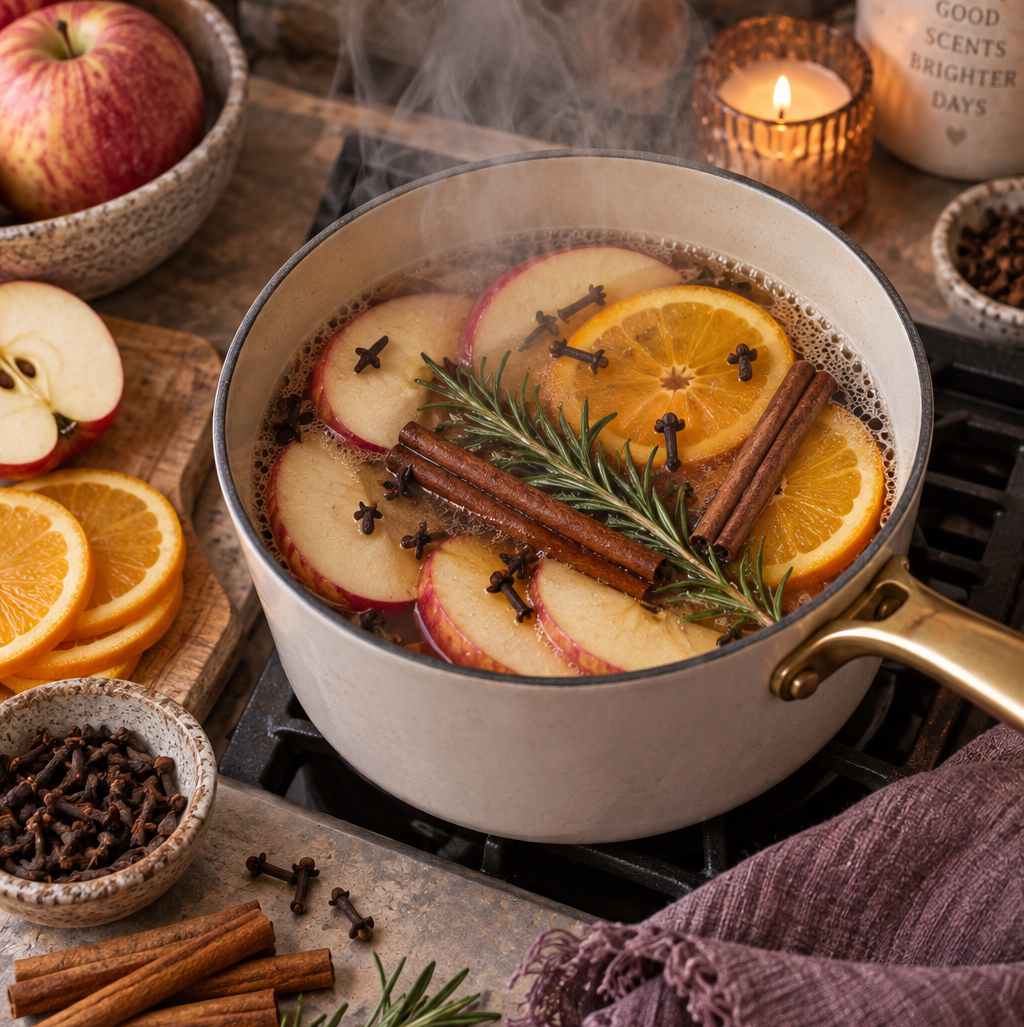
There’s a particular smell that means autumn has properly arrived, and it usually isn’t coming from a candle. It’s the smell of something simmering quietly on the stove: cinnamon, orange peel, a few cloves, maybe a sprig of rosemary. A stovetop simmer pot is one of the easiest ways to fill your home with that scent, and unlike a bowl of dried potpourri, it needs almost nothing you don’t already have in the kitchen.
You don’t need anything special to get started, either. If you’ve got a saucepan, a stove, and a piece of fruit sitting on the counter, you can have a pot going in the time it takes to boil a kettle. That accessibility is a big part of why this kind of potpourri has stuck around every autumn for as long as anyone can remember.
If you’ve already tried the general homemade potpourri method, this is a different project. That one is a dried, decorative bowl mix you look at as much as smell. This is a wet simmer pot you build on the stove, and it’s built for scent output, not display. Below are five specific combinations with exact ratios, plus how to keep them going safely.
It’s also endlessly forgiving. If you’re missing an ingredient from any of the combinations below, swap in something similar from your fruit bowl or spice rack, nothing here is precise enough to ruin by improvising a little.
Table of Contents
🍂 Simmer Pot vs Bowl Potpourri: What’s the Difference
A bowl of dried potpourri sits on a shelf and releases scent slowly, mostly through touch or warmth in the room. A simmer pot works the opposite way: water and heat pull the scent out of fresh or whole ingredients fast, so the whole house smells like it within twenty minutes.
Bowl potpourri is meant to be seen. A simmer pot is meant to be smelled, and it also adds a bit of humidity to the air, which is a nice bonus once the heating starts running.
Neither method is “better”, they’re just built for different jobs. If you want something to glance at on a side table between uses, the dried bowl mix wins. If you want your whole kitchen and living room smelling like mulled cider within the hour, the simmer pot is the one to reach for.
🔥 How to Make a Basic Stovetop Simmer Pot
The method is the same no matter which combination you choose:
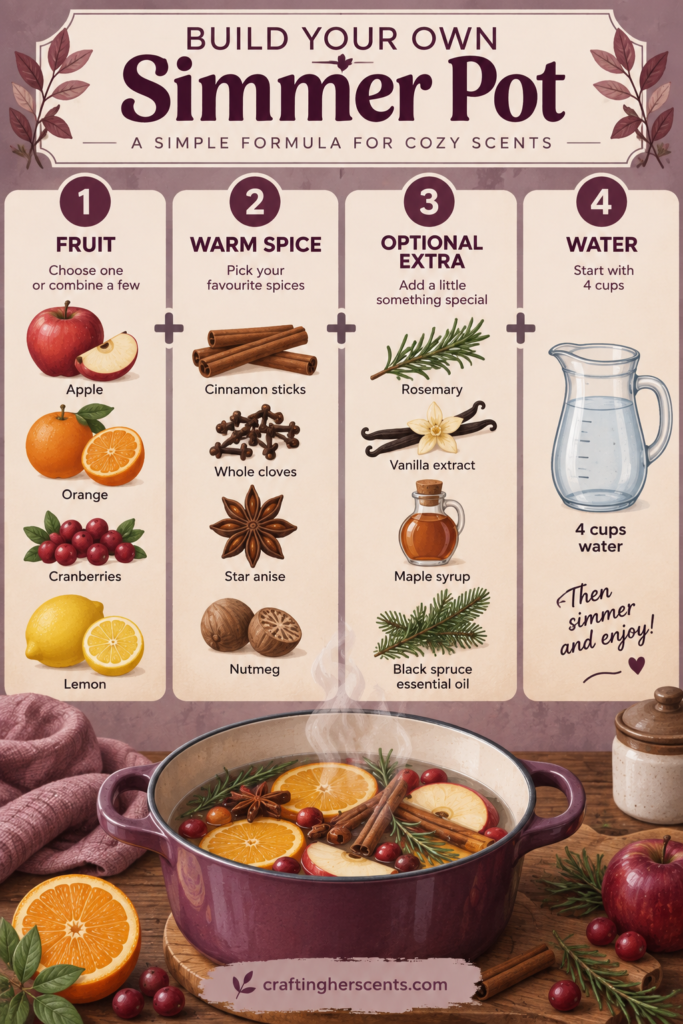
- Fill a small saucepan with about 4 cups of water.
- Add your chosen ingredients (see combinations below).
- Bring to a gentle boil, then immediately reduce to the lowest simmer your stove allows.
- Let it simmer, checking every 20 to 30 minutes to top up the water as it evaporates.
Don’t let it come to a hard boil for more than a minute or two. A gentle simmer releases scent just as well and won’t cook the fruit into mush or burn off the water too quickly.
🧺 Choosing Fresh vs Dried Ingredients
Fresh fruit gives the brightest scent, but it isn’t the only option if your fruit bowl is looking bare. Dried orange slices and apple rings work almost as well once they hit hot water, and they last longer in the pantry between simmer pot sessions.
Whole spices are non-negotiable, though. Ground cinnamon or nutmeg will cloud your water and burn on the bottom of the pan long before it releases much scent, so stick to sticks, pods, and whole cloves rather than reaching for the spice jars.
Tap water works fine for most kitchens, but if yours has a strong mineral smell, filtered water will give you a cleaner scent with nothing competing against it. It’s a small detail, but worth knowing if a batch has ever smelled slightly off despite good ingredients.
🍯 5 Simmer Pot Recipes for Autumn
Each of these makes one pot’s worth. Adjust up if you’re using a larger saucepan.
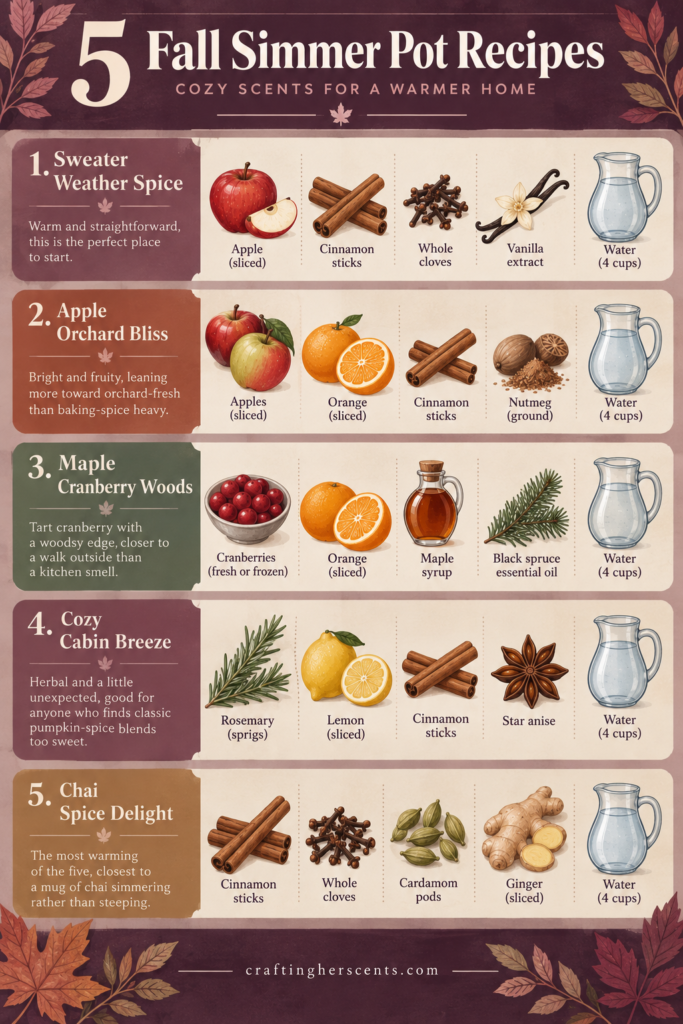
Sweater Weather Spice
Warm and straightforward, this is the one to start with if you’re not sure which direction to go.
- 1 apple, sliced
- 3 whole cinnamon sticks
- 1 tablespoon whole cloves
- 1 teaspoon vanilla extract
- 4 cups water
Apple Orchard Bliss
Bright and fruity, leaning more toward orchard-fresh than baking-spice heavy.
- 2 apples, sliced
- 1 orange, sliced
- 2 whole cinnamon sticks
- 1 teaspoon ground nutmeg
- 4 cups water
Maple Cranberry Woods
Tart cranberry with a woodsy edge, closer to a walk outside than a kitchen smell.
- 1 cup fresh or frozen cranberries
- 1 orange, sliced
- 2 tablespoons maple syrup
- 3 to 4 drops Black Spruce essential oil for a woodsy, forest-like note
- 4 cups water
Cozy Cabin Breeze
Herbal and a little unexpected, good for anyone who finds classic pumpkin-spice blends too sweet.
- 2 sprigs fresh rosemary
- 1 lemon, sliced
- 2 whole cinnamon sticks
- 1 whole star anise
- 4 cups water
Chai Spice Delight
The most warming of the five, closest to a mug of chai simmering rather than steeping.
- 3 whole cinnamon sticks
- 1 tablespoon whole cloves
- 4 cardamom pods, lightly crushed
- 1 whole star anise
- 1-inch piece fresh ginger, sliced
- 4 cups water
Whole cinnamon sticks show up in most of these, so it’s worth keeping a bulk bag on hand rather than buying a few at a time from the spice aisle. It’s a small cost saving if you plan to simmer through the whole season.
🔀 Mixing and Matching: Build Your Own Blend
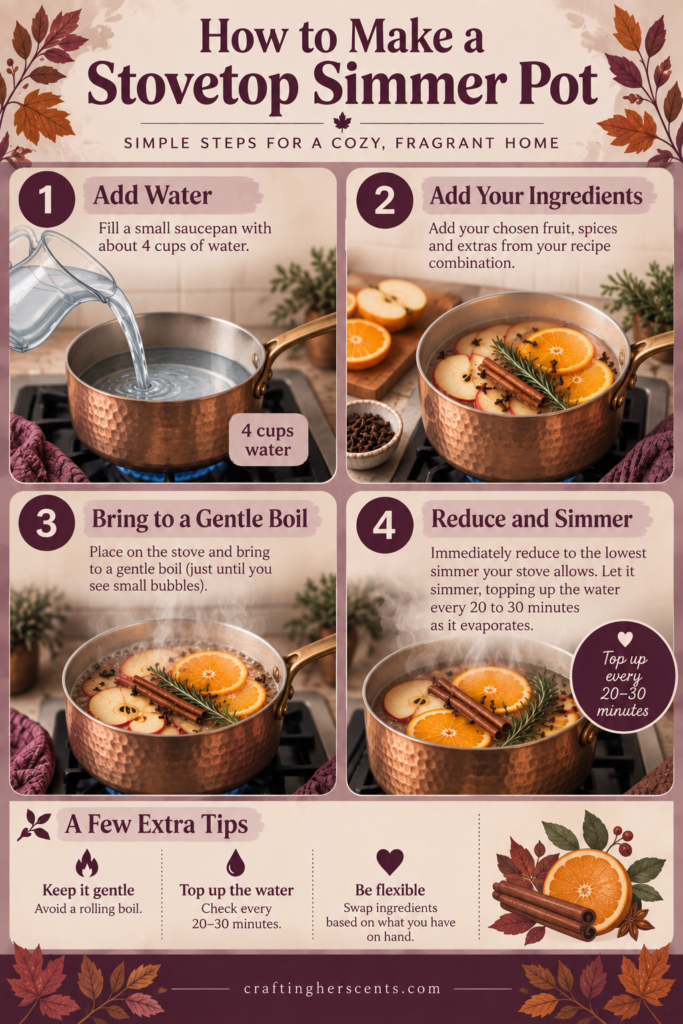
Once you’ve tried a few of the combinations above, it’s easy to start building your own from whatever’s on hand. A good rule of thumb: pick one fruit (apple, orange, cranberry, or lemon), one warm spice (cinnamon, clove, or star anise), and one optional extra (vanilla extract, a few drops of essential oil, or a herb like rosemary or thyme).
Three to four ingredients is usually the sweet spot. Much more than that and the scents start to compete with each other rather than blending into something you can actually identify. If a batch smells muddled rather than cosy, it’s often a sign there’s one ingredient too many rather than one too few.
This is also a good way to use up fruit that’s a bit past its best for eating. Slightly soft apples or oranges that are starting to dry out still have plenty of scent left in them, even if you wouldn’t want to eat them plain.
🕯️ Slow Cooker and Wax Warmer Alternatives
Don’t want to watch a pot on the stove all afternoon? A small slow cooker on the lowest setting works just as well, and it’s a lot easier to leave running safely while you’re doing other things around the house.
A slow cooker also has the advantage of a lid with a vent, so it won’t dry out nearly as fast as an open saucepan on the stove. Fill it the same way, water plus your chosen combination, and check it every hour or so rather than every twenty minutes.
For a no-water option, a wax warmer with a few drops of a fall-scented blend gives you the same cosy atmosphere without any simmering at all. A few drops melted with unscented wax, or straight into an oil warmer dish, will scent a room steadily for hours with nothing to top up or watch.
It’s a good choice for smaller spaces or if you’d rather skip the stovetop step entirely.
⚠️ Keeping Your Simmer Pot Safe
A few habits matter more than any specific recipe:
- Never leave a simmering pot unattended, especially if you’re going out or heading to bed.
- Check the water level regularly. A pot that boils dry can scorch and, in the worst case, become a fire risk.
- Keep the heat on low once it’s simmering. You don’t need a rolling boil for the scent to fill the room.
- Keep pot handles turned inward if you have curious pets or kids in the kitchen.
None of this is complicated, it just needs a bit of attention the way any stovetop cooking does.
🎁 Turning a Simmer Pot Into a Gift
A dry simmer pot mix also makes a nice small gift, and it takes almost no extra effort once you’ve settled on a combination you like. Layer the dry ingredients (cinnamon sticks, cloves, dried orange slices, star anise) into a small jar, and tie on a tag with simple instructions: empty into a small pot, add four cups of water, and simmer.
It’s a nice one to put together in batches if you’re making a few for neighbours or teachers, since most of the combinations above use ingredients you’d buy in bulk anyway. Cinnamon sticks and star anise both hold their scent well dry, so jars made a few weeks ahead of time will still smell strong when they’re opened.
📦 How Long a Batch Lasts and Storing Leftovers
Most simmer pot combinations will hold their scent for six to eight hours of simmering before the ingredients start to lose their punch. You can usually get a second, lighter simmer out of the same batch the next day if you keep it in the fridge overnight.
If you’ve made a bigger batch than you need in one sitting, most of the combinations above will keep in an airtight container in the fridge for two to three days before the scent drops off noticeably. Reheat gently rather than starting from a hard boil, since the fruit will already be soft from the first simmer.
Freezing a simmer pot mix also works if you want to prep several bags ahead of the season. Portion the fresh ingredients into freezer bags, and add them straight to the pot with water when you’re ready to use them, no need to thaw first.
Once the scent has faded, the fruit and spices are spent and can go straight into the compost. There’s nothing here worth saving beyond a day or two, which is part of what makes this such a low-effort seasonal ritual: no jars, no drying racks, just a pot and whatever’s in the fruit bowl.
🌿 Prefer Essential Oils Instead?
If you’d rather skip the fruit and spices altogether and build your autumn scent entirely from essential oils, our guide to the best fall essential oils for your home covers the specific oils and blends worth reaching for this time of year. It’s a good next stop if you want a diffuser-based routine alongside, or instead of, your simmer pot.
Whichever method you land on, the goal is the same: a house that smells like autumn without needing a single scented candle. And if you end up loving the ritual of it, this is exactly the kind of small habit that makes a house feel more like a home once the clocks change and the evenings draw in.