I sometimes use affiliate links in content. This doesn’t cost you anything but I may make a commission payment from anything you buy through these links. As an Amazon Associate I earn from qualifying purchases. All opinions remain my own.
There is something lovely about the moment a fire catches. If you have a wood burner, fire pit or open fire, a little hint of cedar or orange as the kindling takes can make that moment feel just that bit cosier.
That is what scented fire starters are for. They light easily, burn long enough to get your kindling going and add a pleasant fragrance as they warm and catch.
I want to be upfront about one thing before we begin. The name “aromatherapy fire starters” is popular, but heat burns off most of the aroma quickly, so this is about atmosphere and a nice scent, not a therapeutic effect. I will not be making any claims about what breathing in smoke or fumes might do for you, and neither should you.
Table of Contents
⚠️ Safety First: Read This Before You Start
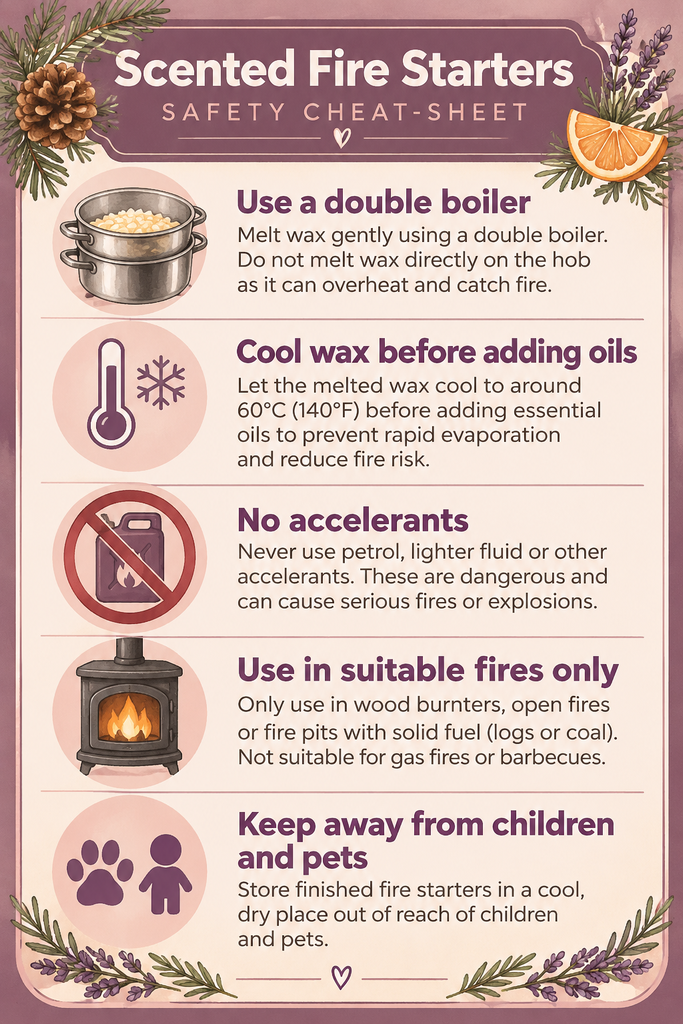
Essential oils are flammable, and wax is hot. Fire starters are, by design, things that burn, so it pays to be careful from the very first step.
- Melt wax only in a double boiler or a heatproof bowl over a pan of simmering water, never directly on the heat and never in the microwave.
- Work away from naked flames, gas rings and candles while you handle the oils.
- Take the wax off the heat and let it cool for a few minutes before you stir the oil in. One UK supplier’s safety data sheet for cedarwood oil lists a flash point of 85°C and describes it as a combustible material.
- Never add oil to wax that is still on the heat source, and never use any accelerant or fuel to help a fire starter along. Scented fire starters should not need it.
- Keep wax, oils and finished starters out of reach of children and pets. My guide to essential oils for pets explains why oils and animals need careful handling.
- Only burn fire starters in a suitable appliance, such as a wood burner, fire pit or open fireplace. Follow your appliance manufacturer’s guidance.
- Keep a heatproof surface, a lid and kitchen roll to hand, and never leave melting wax unattended.
If anything about the process makes you uneasy, stop and keep it simple. A plain fire starter with no oil is perfectly good.
🧪 Essential Oil or Fragrance Oil? Why It Matters Here
You will see both types of product sold for scenting crafts, and they are not the same thing.
An essential oil is a concentrated plant extract. A fragrance oil, sometimes labelled an infused or perfume oil, is a lab-made blend that may or may not contain natural ingredients.
For fire starters, this matters for two reasons. Fragrance oils are often made for candles and wax melts, and may burn differently. Essential oils are natural, but they are still flammable and are not interchangeable with fragrance oils for amounts or safety. Always check the label.
If you are not sure what you are buying, my guide to what to look for when buying essential oils is a good place to start. This recipe is written for pure essential oils only.
🌲 Which Essential Oils Suit Fire Starters?
The best oils for this job are warm, woody and comforting. They suit the smell of a fire already, so the scent feels natural rather than perfumed.
Good choices include:
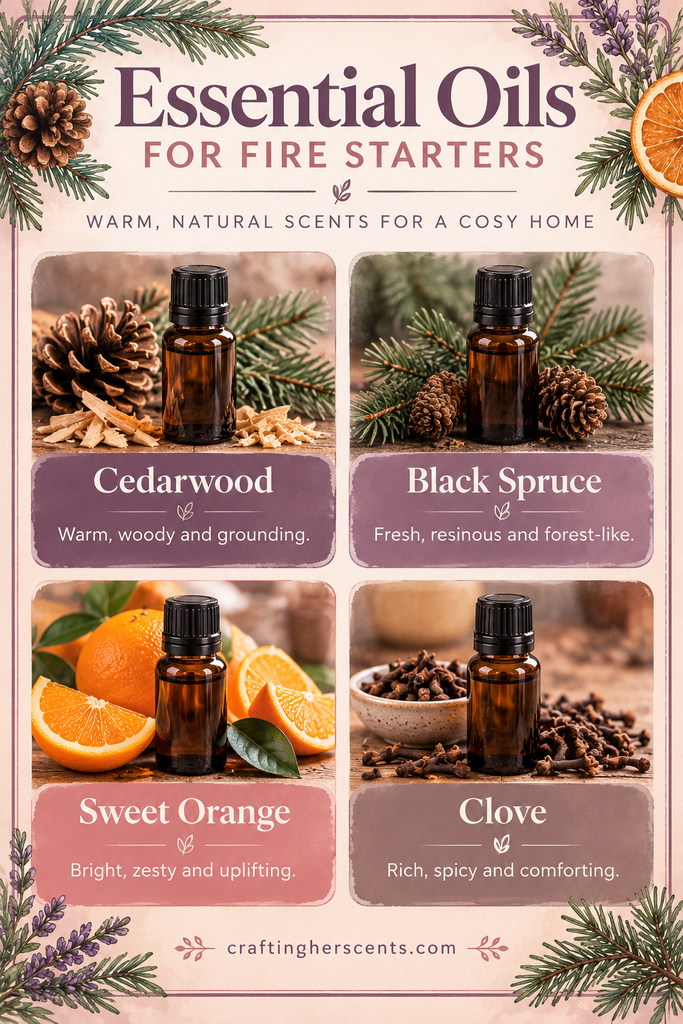
- Cedarwood: a warm, dry, woody scent that blends well with almost anything. See my cedarwood atlas essential oil guide.
- Pine, fir or spruce: fresh and evergreen. Black spruce essential oil is a lovely option.
- Sweet orange: bright and cheerful. Read more in my orange essential oil guide.
- Clove: spicy and festive, but strong, so use it sparingly. A little clove bud essential oil goes a long way, and my clove essential oil guide has more detail.
- Warm spice blends: a little cinnamon leaf or ginger alongside orange makes a gently spiced mix.
Oils to leave out include anything very delicate, such as rose or neroli, because the scent will vanish in the heat and the cost is hard to justify. Avoid oils your household finds irritating, and handle clove with care, as it can irritate skin when undiluted.
Three easy blends to start with
These are starting points only. Use the amounts in the method below.
- Woodland: cedarwood and black spruce
- Cosy spice: sweet orange and a little clove
- Winter hearth: cedarwood, sweet orange and a touch of clove
If you want blending ideas, how to mix essential oils to create your own blends explains the basics.
🧰 What You Will Need
You can make these with everyday items. Most can be found in supermarkets, garden centres, craft shops or around the house.
- Cardboard egg boxes (not polystyrene or plastic)
- Dry, untreated sawdust or wood shavings, or plain cotton pads
- Dry pine cones, collected from the ground and fully dried
- Leftover candle wax, or plain soy or paraffin wax, about 200 g
- A heatproof bowl and a saucepan for a double boiler
- A wooden spoon or old spatula you do not mind dedicating to wax
- Baking parchment or a wire rack
- Essential oils of your choice
- Glass jars or tins for storage
Use only untreated, natural materials. Do not use treated wood, chipboard or MDF sawdust, and avoid anything with a coating or print, because it may burn badly.
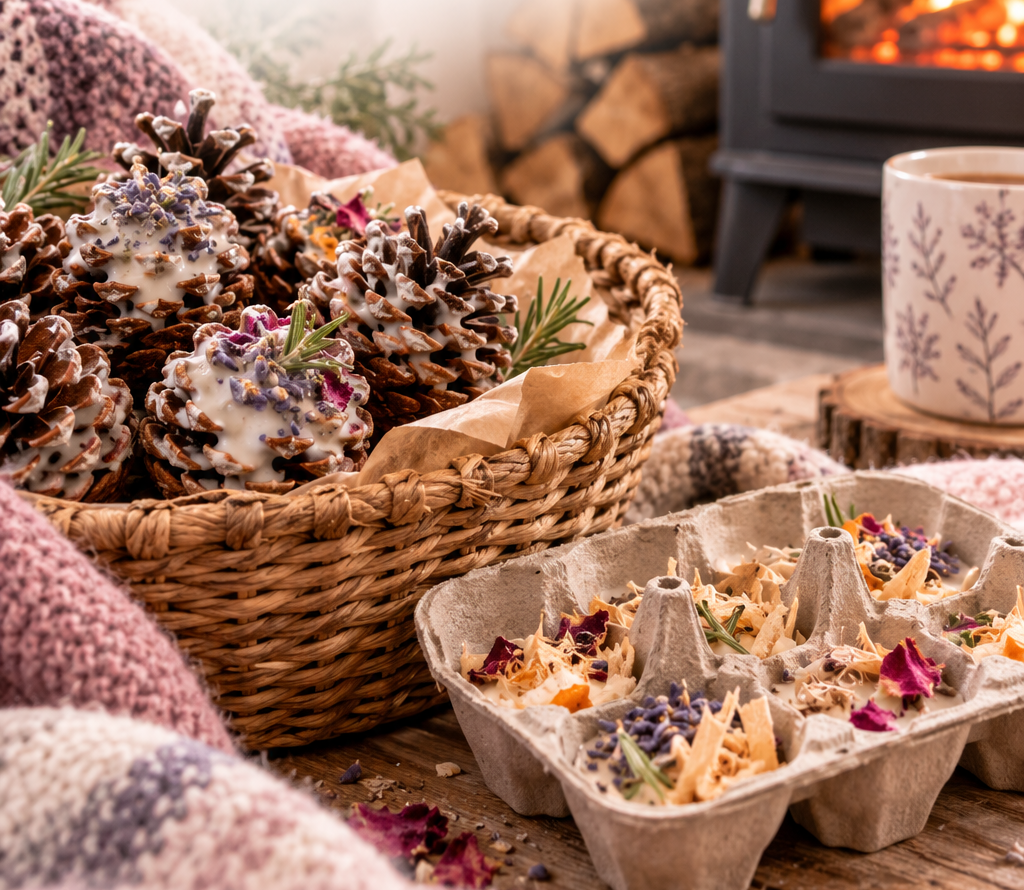
🔥 Method One: Egg Box and Wax Fire Starters
This is the classic, and it makes a dozen starters from one egg box.
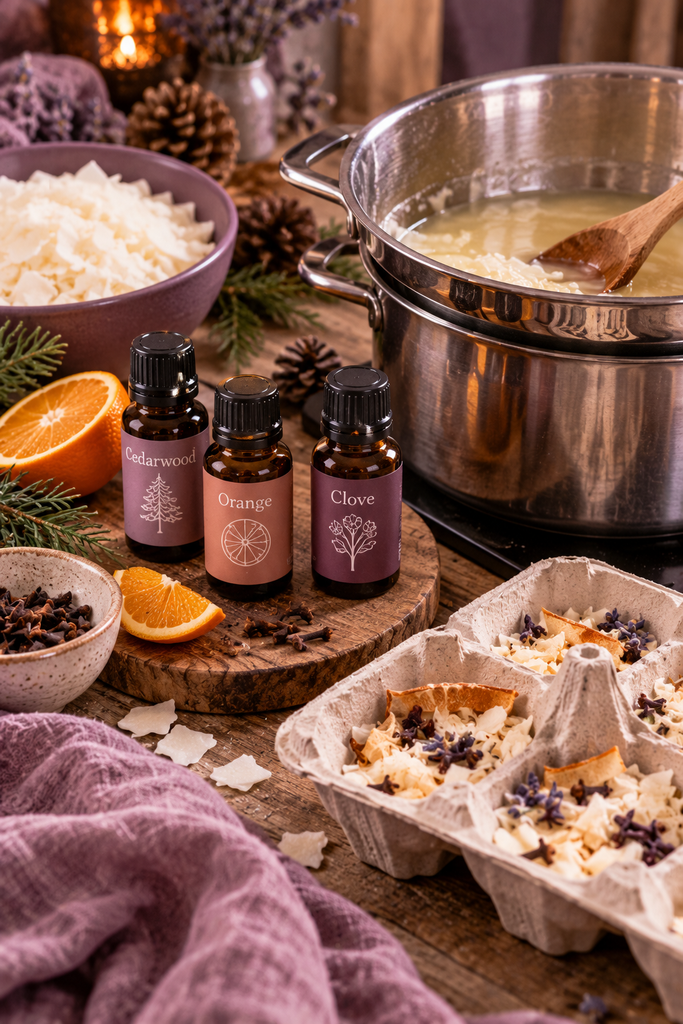
- Fill each cup of a cardboard egg box with dry sawdust or wood shavings, pressing down lightly.
- Melt about 200 g of wax in your double boiler over a low heat.
- Take the bowl off the heat and let the wax cool for a few minutes until it is still liquid but no longer steaming.
- Stir in around 10 to 15 drops of essential oil per 100 g of wax, in a well-ventilated spot.
- Pour the wax carefully over the filling in each cup, until it is just covered.
- Leave to set completely, which usually takes a few hours, then cut or tear the box into individual starters.
Light the cardboard corner and let the starter catch your kindling, placed under your logs as usual.
🌰 Method Two: Pine Cone Fire Starters
Pine cones are naturally flammable, and they look gorgeous in a basket by the hearth.
- Choose dry cones with open scales and shake out any debris. Dry them indoors for a day or two if they feel damp.
- Melt about 200 g of wax in a double boiler, then take it off the heat and let it cool for a few minutes.
- Stir in around 10 to 15 drops of essential oil per 100 g of wax.
- Holding the base of each cone with tongs, dip or spoon the wax over it until coated.
- Place on baking parchment or a wire rack and leave to set.
Add a loop of natural string to the top if you want to hang them or give them as gifts. A good tip from other makers is to never burn shop-bought scented or cinnamon-treated cones, since their coatings are unknown.
🧵 Method Three: Cotton Pad Fire Starters
This is the tidiest method and good if you have no sawdust to hand.
- Melt about 150 g of wax in a double boiler, then take it off the heat and let it cool for a few minutes.
- Stir in 10 to 15 drops of essential oil.
- Dip a plain cotton pad into the wax, turn it over, and lift it out with tongs.
- Lay on baking parchment to set. Keep each pad flat.
These burn for a shorter time than egg box starters, so they suit small wood burners where a quick light is all you need.
🎁 Storing, Packaging and Gifting
Finished fire starters should be stored somewhere cool and dry, away from heat sources, children and pets. A lidded tin, a glass jar or a wooden box all work well.
Keep different scents in separate containers so they do not blend into each other. They will hold their scent best if you keep the lid on, and my notes on the shelf life of essential oils apply to the oil you use.
For gifts, tie a few starters together with natural twine or pack them in a small crate with a handwritten label naming the oils and the safety guidance: “Use only in a wood burner, fire pit or open fire. Keep away from children and pets.” If you are in a gifting mood, essential oil blends for a Christmassy home gives inspiration for pairing scents.
🕯️ More Cosy DIY Ideas
If you enjoy this kind of project, you may also like my guides to DIY essential oil candles, homemade potpourri and a pumpkin spice room spray. They are all easy to make and sit nicely beside a fireside basket.
Scented fire starters will not change your life, but they are a charming, thrifty way to add a little warmth to an evening in. Make them carefully, burn them safely, and enjoy the scent as the fire catches.