I sometimes use affiliate links in content. This doesn’t cost you anything but I may make a commission payment from anything you buy through these links. As an Amazon Associate I earn from qualifying purchases. All opinions remain my own.
If you’ve ever picked up a bottle labelled “marjoram” and wondered whether it’s the same thing as the oregano oil on the next shelf, you’re in good company. The names overlap, the plants are close relatives, and the labels don’t always help. Sweet marjoram is a gentler, warmer oil with a cosy, herbaceous character, and it deserves to be understood on its own terms.
This guide is for anyone who already owns a few essential oils and wants to use them well. We’ll sort out the name confusion, look at the aroma and how it behaves in a blend, cover simple ways to use it, and spend proper time on safety. Everything here is about aromatherapy traditions and home use, and none of it is medical advice.
Table of Contents
🌿 What Is Sweet Marjoram Essential Oil?
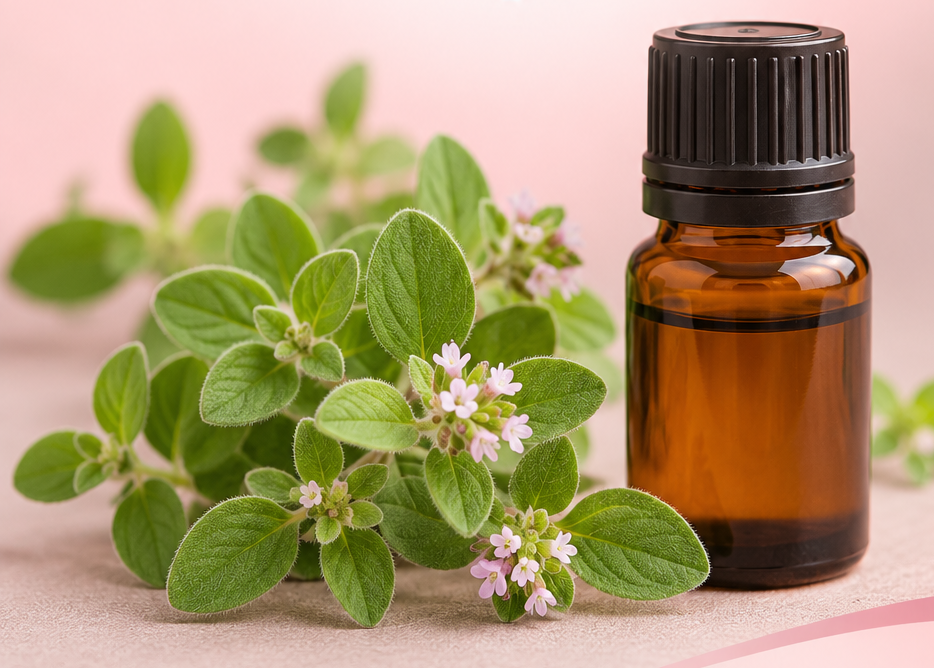
Sweet marjoram essential oil comes from Origanum majorana, a bushy, aromatic herb in the mint family. The oil is steam distilled from the leafy, flowering parts of the plant, although suppliers differ on exactly which parts they list. You’ll sometimes see it called knotted marjoram too.
The botanical name is the most important thing on the label. It’s the one detail that tells you which marjoram is actually in the bottle, and it’s worth checking every time.
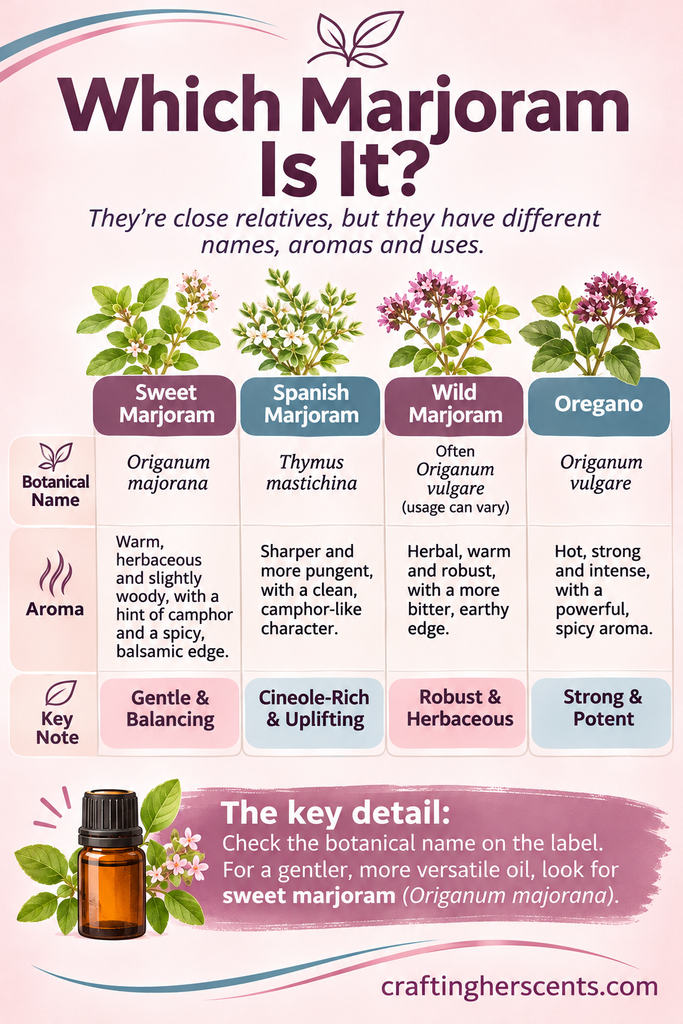
🔎 Sweet Marjoram vs Oregano, Spanish Marjoram and Wild Marjoram
This is where most of the confusion lives, so let’s untangle it.
- Sweet marjoram (Origanum majorana): The one this post is about. Warm, spicy and balsamic, and rich in a compound called terpinen-4-ol, which it shares with tea tree and lavender.
- Spanish marjoram (Thymus mastichina): Despite the name, this is a type of thyme. It’s cineole-rich, which puts it closer to eucalyptus and rosemary, and its aroma is sharper and more pungent. One aromatherapy supplier is blunt about it: the two oils are not interchangeable.
- Wild marjoram: A common name that is often used for oregano (Origanum vulgare), though it’s applied loosely, so the Latin name matters more than the common one.
- Oregano: A much hotter, more intense oil with a very different safety profile. If you’re curious, my oregano essential oil post covers it, and my thyme essential oil post covers another close relative.
In short, if the bottle just says “marjoram”, look for Origanum majorana and the word “sweet” before you trust it.
👃 The Aroma and Where It Sits in a Blend
Sweet marjoram smells warm, herbaceous and slightly woody, with a hint of camphor and a spicy, balsamic edge. Some people find it reminiscent of a kitchen herb drawer, while others describe it as cosy and comforting. It’s a middle note, so it sits in the heart of a blend and helps join brighter top notes to deeper base notes.
A little goes a long way. Marjoram can take over a blend quickly, so I treat it as a supporting player and add it a drop at a time.
It pairs nicely with oils that echo its warmth or soften its edges:
- Lavender: A familiar, floral partner that rounds out the herbal side.
- Bergamot: Adds a bright citrus lift. My bergamot essential oil guide has more, including the sun-exposure cautions that apply to it.
- Cedarwood: Brings a dry, woody depth.
- Clary sage: Adds a soft, herbaceous sweetness.
- Rosemary: A fresher, more camphorous herbal companion. See my rosemary essential oil post for its profile.
🕯️ Traditional Uses and the Mood It’s Known For
Marjoram has a long history in kitchens and in folk traditions, and its essential oil has a reputation in aromatherapy for creating a calm, warming atmosphere. Many people reach for it as part of an evening wind-down routine, perhaps alongside a cup of something warm and a dimmed lamp.
I want to be careful here. Those are traditional associations and personal experiences, not proven effects, and your own response may be different. Use it because you enjoy the scent and the ritual, and treat any sense of calm as a pleasant bonus rather than something to rely on.
💨 Simple Ways to Use It
In a diffuser
This is the easiest and gentlest way to enjoy it. Add a few drops to water in your essential oil diffuser, following the manufacturer’s guidance for how many drops your model suits.
A good starting point is 3 to 5 drops in total for a standard 100 ml reservoir. Run it in intervals rather than continuously, and keep the room ventilated.
In a room spray
A homemade spray is a lovely way to scent a bedroom or reading nook. Use a dark glass bottle, as essential oils can degrade plastic and light. I like this amber glass spray bottle because the glass protects the blend.
Fill a 100 ml bottle with water and add around 15 drops of essential oil in total, which works out to roughly 0.75 per cent. Oil and water don’t mix, so shake well before every spritz and keep the spray away from fabrics and polished surfaces.
Diluted on the skin
If you’d like to use it topically, it must always be diluted in a carrier oil, never applied neat. A common home-use dilution is 1 per cent, which is about 6 drops of essential oil in 30 ml of carrier. That total counts every essential oil in the blend, not just marjoram.
A light, stable carrier such as jojoba carrier oil works well, and my guide to carrier oils explains how to choose between them. For more on methods, see how to apply essential oils.
Essential oil vs infused oil
This distinction trips a lot of people up, so let’s be clear. An essential oil is a highly concentrated aromatic extract, produced by steam distillation. An infused oil is simply a carrier oil, like olive or sunflower, that has had herbs steeped in it.
They are not the same product and not interchangeable. A “marjoram infused oil” is far milder and made differently, and you can’t swap it for essential oil in a recipe or use essential oil as though it were an infused oil. Always check which one you’re holding.
🧪 Three Simple Blend Ideas
These are for diffusing in a standard 100 ml reservoir. Adjust to your machine, and keep drop counts low if you’re sensitive to scent.
Cosy evening blend
Soft herbal garden blend
- 2 drops sweet marjoram
- 2 drops clary sage
- 1 drop bergamot
Warm woodland blend
- 1 drop sweet marjoram
- 2 drops cedarwood
- 1 drop lavender
- 1 drop rosemary
If you’d like to go deeper into creating your own combinations, how to mix essential oils is a helpful next read.
⚠️ Safety: Please Read This Section
Sweet marjoram is generally treated as a gentle oil in aromatherapy, but “gentle” doesn’t mean “risk-free”. Essential oils are potent, and a few sensible habits make a big difference.
Dilution and patch testing: Never use it undiluted on skin. Before using any blend topically, do a patch test by applying a small amount of diluted oil to your inner forearm and waiting 24 hours. Stop if you notice any redness, itching or irritation.
Pregnancy and breastfeeding: Some suppliers advise against using it at all during pregnancy or while nursing. If you’re pregnant, trying to conceive or breastfeeding, please speak to your doctor, midwife or a qualified aromatherapist before using it.
Children: Keep it well out of reach and avoid using it on babies and young children. If you’re unsure about children in the room, skip diffusing it.
Pets: Animals process essential oils differently from us, and cats in particular can be very sensitive. Ventilate the room, give pets a way to leave, and read my post on essential oils for pets before diffusing around them.
Medication and health conditions: If you take regular medication or have a medical condition, check with your doctor or pharmacist before using essential oils.
Never swallow it: Essential oils are not for ingesting. This includes adding drops to food or drink, and it goes for marjoram too.
Eyes and sensitive areas: Keep it away from your eyes, ears, mouth and other sensitive areas.

🌙 Building a Simple Evening Ritual Around It
Scent works best when it’s part of a routine you enjoy, so I like to pair it with small, repeatable habits. The oil is only one piece of the picture.
Here’s a gentle way to set the scene on a quiet evening:
- Dim the main light and switch on a lamp.
- Start your diffuser with one of the blends above about 20 minutes before you settle down.
- Make a warm drink, put your phone in another room, and open a book or your journal.
- Switch the diffuser off when you’re done and open a window for a few minutes.
None of this is a treatment, and it won’t suit everyone. If you find the scent too strong or it doesn’t feel right, stop and air the room. Your comfort always comes first.
❓ Questions I Get Asked About Sweet Marjoram
Is sweet marjoram essential oil the same as the dried herb in my spice rack? They come from the same plant, but they’re very different products. The dried herb is for cooking, while the essential oil is a concentrated extract made for aromatherapy and shouldn’t be eaten.
Can I use it every day? There’s no single rule, and it depends on you, your home and your sensitivity. I tend to diffuse in short sessions rather than all day, and I give my nose regular breaks.
Can I mix it with oregano or thyme oil? You can, but those oils are stronger and carry different cautions, so I’d start with a very low amount and read their guides first. Sweet marjoram is generally the softer partner in that trio.
How long will a bottle last? Stored properly, many oils stay pleasant for a year or two, though it varies by oil and conditions. If the scent smells flat, sharp or off, it’s time to replace it.
Do I need a special diffuser? Any standard ultrasonic diffuser will do. Just keep it clean, as built-up residue can affect how well it works and how your oils smell.
🛍️ Buying Quality Oil and Storing It
Look for a brand that lists the full botanical name, Origanum majorana, the plant part used and the country of origin. Dark glass bottles, a clear batch or lot number, and a reasonable price are all good signs. A very cheap bottle labelled “marjoram oil” may be diluted, blended or a different species entirely.
Many suppliers also sell sweet marjoram as part of single-oil collections, so it’s worth comparing a few before you buy. My guide on what to look for when buying essential oils walks through the checks I use.
For storage, keep the bottle tightly capped in a cool, dark place away from heat, sunlight and damp. Oils oxidise over time, which can change both the scent and how your skin reacts to them. My post on the shelf life of essential oils explains how to tell when one has passed its best.
🌸 Quick Recap
Sweet marjoram (Origanum majorana) is a warm, herbaceous middle-note oil that blends beautifully with lavender, cedarwood and clary sage. Use it in small amounts, dilute it properly for skin, and keep safety front of mind, especially around pregnancy, children and pets.
Check the Latin name, remember the difference between an essential oil and an infused oil, and enjoy it for what it is: a cosy little addition to your aromatherapy shelf.