I sometimes use affiliate links in content. This doesn’t cost you anything but I may make a commission payment from anything you buy through these links. As an Amazon Associate I earn from qualifying purchases. All opinions remain my own.
There is something wonderfully simple about a face mask that starts with one ingredient you already have in the cupboard. Honey has been used as a skin-soothing base for centuries, long before serums and ten-step routines existed, and it is still one of the gentlest things you can put on your face. Add a couple of well-chosen essential oils and you have a mask that feels like a small ritual rather than another item on your to-do list. This guide walks through how to do that safely, with real dilution numbers rather than guesswork, so you can enjoy the experience without worrying about what is actually in the bowl.
Table of Contents
🍯 Why Honey Works So Well as a Mask Base
Honey is thick, tacky and naturally soothing on the skin, which is exactly why it has stayed popular as a traditional beauty staple. It clings to the face long enough to feel like a proper mask, then rinses away cleanly with warm water.
This post treats honey as a lovely, traditional base rather than a treatment for any specific skin condition. Think of it as the canvas that carries your chosen scent and texture, not a stand-in for skincare that addresses acne, ageing or other concerns.
Raw or regular honey? Either works for this recipe. Raw, unfiltered honey has a thicker texture and a slightly more rustic feel on the skin, while regular runny honey is easier to mix and spreads more smoothly. Neither is more “correct” here. Pick whichever you already have in the cupboard.
🌿 How Much Essential Oil to Actually Use
This is the part most DIY recipes skip, and it matters. Facial skin is more sensitive than the skin on the rest of your body, so aromatherapy safety guidelines call for a much lighter hand here than you might use in a body oil or bath soak.
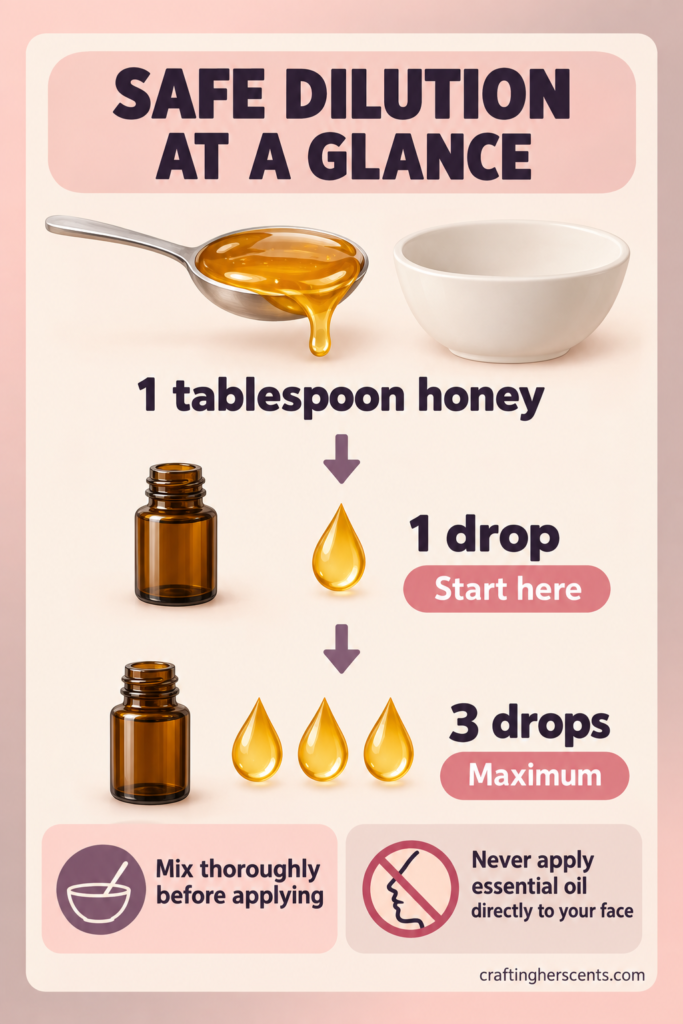
For a leave-on facial recipe like this one, aim for 1 to 3 drops of essential oil per tablespoon of honey. That keeps you in the low dilution range recommended for facial cosmetics, rather than the stronger dilutions that are fine for a diffuser blend or a chest rub but too much for delicate facial skin.
A few practical notes:
- Start at 1 drop per tablespoon if you have never used that oil on your skin before.
- Never add essential oil directly to your face before mixing it into the honey.
- More is not better here. A heavier hand simply raises your risk of irritation without adding any benefit.
If you want to understand dilution more broadly across skincare, not just this recipe, The Best Essential Oils for Skin Care covers the general picture in more depth.
💧 Three Oil Pairings to Try
Each of these oils has a long history of traditional use in skincare. None of the pairings below are treatment claims, just pleasant, well-tolerated options to try depending on how you want the mask to feel.
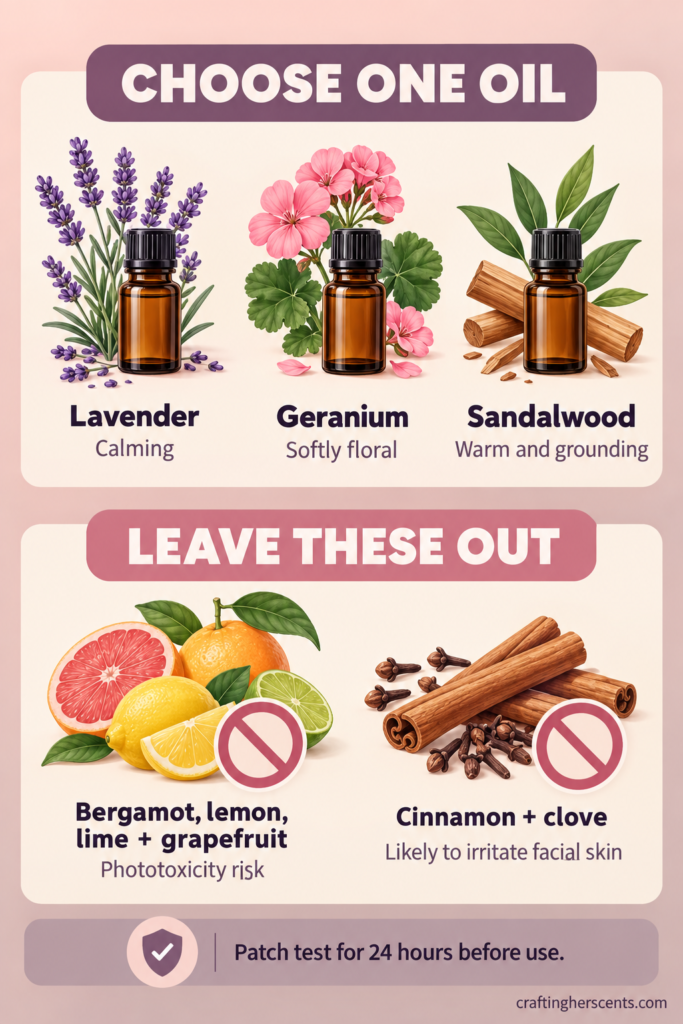
- Lavender for a calming, bedtime-ready mask. Read the full Lavender Essential Oil profile if you would like to know more about it before you buy a bottle.
- Geranium for a slightly floral, balancing feel. The Geranium Essential Oil guide has more on where this oil comes from and how it is typically used.
- Sandalwood for a warm, grounding mask that feels a little more indulgent. If you would like to try it, this sandalwood essential oil is a good quality option to start with, and the Sandalwood Essential Oil profile has the full safety and use details.
Pick one oil at a time rather than blending all three into a single mask. It keeps the dilution simple and makes it much easier to notice how your skin responds.
⚠️ Oils to Leave Out of a Face Mask
A few oils are worth avoiding here, even though they are common in other parts of an essential oil collection.
- Citrus oils such as bergamot, lemon, lime and grapefruit are phototoxic when applied to skin that then sees the sun. Since this mask stays on the face for several minutes and there is no reliable way to guarantee no sun exposure afterwards, it is simplest to skip citrus oils in this recipe entirely.
- Cinnamon and clove are known skin irritants, even at low dilutions, and have no place in a leave-on facial recipe. If you are curious about them, the Cinnamon Essential Oil and Clove Essential Oil posts are better suited to uses other than skincare.
If in doubt about a specific oil, leave it out of the face mask and save it for a diffuser blend instead.
The reason citrus oils get singled out is worth understanding, not just following blindly. Expressed citrus oils contain compounds called furanocoumarins, which can react with UV light once they are on your skin and increase the risk of irritation or discolouration. That reaction can happen even hours after application, not just in the few minutes right after you rinse off a mask, which is exactly why this recipe leaves citrus out rather than adding a “wait a few hours before going outside” caveat.
🧪 Patch Test First, Every Time
Honey is a bee product, so if you have any known allergy or sensitivity to honey, bee pollen or propolis, skip this recipe altogether.
For everyone else, patch test before applying anything to your whole face:
- Mix a small amount of your chosen recipe.
- Apply a dab to your inner forearm.
- Wait 24 hours and check for redness, itching or irritation.
Keep the mask away from your eyes, and if you are pregnant or nursing, check with your healthcare provider before introducing a new essential oil to your routine, even in a small facial recipe like this one.
🧺 The Base Recipe
Once you have patch tested and chosen your oil, the recipe itself is simple.
You will need:
- 1 tablespoon raw honey
- 1 to 3 drops of your chosen essential oil (lavender, geranium or sandalwood)
- A small bowl and spoon for mixing
To make it:
- Spoon the honey into your bowl.
- Add your essential oil drops and stir well so the oil is evenly distributed, not pooled in one spot.
- Apply to clean, dry skin with clean fingers, avoiding the eye area.
- Leave on for 10 to 15 minutes.
- Rinse off with warm water and pat your skin dry.
That is the whole recipe. There is no need to add extra ingredients to make it feel more like a “real” product. Simple is exactly the point.
📦 Make It Fresh, Use It Right Away
This mask is not designed to be batch-made and stored. Mix only what you need for one application, use it straight away, and make a fresh batch next time. Honey and essential oils in a wet mixture do not have the preservative system needed to sit safely on a shelf, so treat this as a same-day recipe rather than something to jar up in advance.
If you enjoy having your skincare ingredients organised and ready to go, it is worth keeping your chosen oils and a jar of honey together in one spot so the whole process takes five minutes rather than turning into a search through the cupboard.
🙋 Quick Questions
Can I use manuka honey instead? Yes, though there is no need to reach for the expensive jar just for this recipe. Manuka honey is prized for other reasons, but for a simple mask base, any raw or regular honey does the job.
How often can I use this mask? Once or twice a week is plenty. Daily use is not necessary and does not make the mask more effective, it just uses up your honey and oils faster than you need to.
Is this mask suitable for children? No. Essential oils need different, much lower dilution guidance for children, and this recipe is written for adult use only.